Showing posts with label Puglia. Show all posts

Sunday, 26 November 2017

Chi tene 'o mare...al teatro Mercadante

Chi tene 'o mare è fess e cuntend, chi tene 'o mare ossaje, nun tene niend.

Così recita una delle più poetiche canzoni di Pino Daniele, ieri sera reinterpretata dalla sempre verde Teresa De Sio nel suo show "Teresa canta Pino", al teatro Mercadante di Altamura, capitale della Murgia pugliese.


Un'esplosione di energia lo show della De Sio, accompagnata dai suoi brillanti musicisti tra cui l'esuberante violinista H.e.r.

Anche i più scettici convenuti ieri sera, a fine concerto avrebbero forse voluto alzarsi in piedi, saltare ed abbracciare i propri vicini, tanto era il calore, la sana pazzìa che arrivava dal palcoscenico.


"Voi la conoscete la parlèsia? 
La parlèsia è un codice parlato esclusivamente dai musicisti napoletani, un linguaggio usato per non farsi intendere dagli altri.


Vi dedico pertanto una canzone che ho scritto in memoria di Pino intitolata 'o jammone, che in parlèsia significa capo".


Teresa è impegnata da tempo nel progetto culturale di recupero e valorizzazione della cultura musicale del Sud. 


Penso al film documentario Craj girato nel 2005, concepito come un viaggio per la Puglia alla scoperta degli ultimi cantori quali Matteo Salvatore, Antonio Maccarone ed Uccio Aloisi.


Questa volta però Teresa ha inteso riportare a galla della nostra fugace memoria il suo concittadino Pino Daniele, cantautore napoletano e musicista italiano tra i più apprezzati all'estero.


Pino Daniele, e chi se li dimentica i suoi pezzi? Vivono sottopelle di chi li ha amati.

Io ho avuto la fortuna di assistere ad un concerto di Pino, a Torino, quando ero uno studente universitario. Quanti ricordi...

Ieri sera mi salivano le lacrime agli occhi quando ascoltavo Quanne chioveChi tene 'o mare...

...Napule è poi è qualcosa di più di una canzone: è una preghiera, una invocazione.


Chi non ha mai cantato con gli amici Je so pazz? La rivolta, il senso di ribellione verso uno Stato che ha spesso tradito il sud, costringendo con la repressione e la fame milioni di concittadini ad emigrare all'estero. Un po' quello che sta succedendo oggi, in tutta Italia questa volta.

Pino Daniele portò una ventata di aria fresca nella musica italiana. 

Apprezzato molto all'esteso, vanta collaborazioni importanti come Pat Metheny, Eric Clapton, Chick Corea e tanti altri.


4 giorni prima che morisse, lo vidi in tv esibirsi per la Rai, di notte, alla vigilia di capodanno. 

Lo vidi teso, contratto. 

Dissi a mia madre: "Pino Daniele non mi sembra stia bene". Morì il 4 gennaio 2015.

Lui soffriva di cuore, triste destino in comune con Massimo Troisi. 

Ciao Pino, ti porto nel cuore.

Wednesday, 9 November 2016

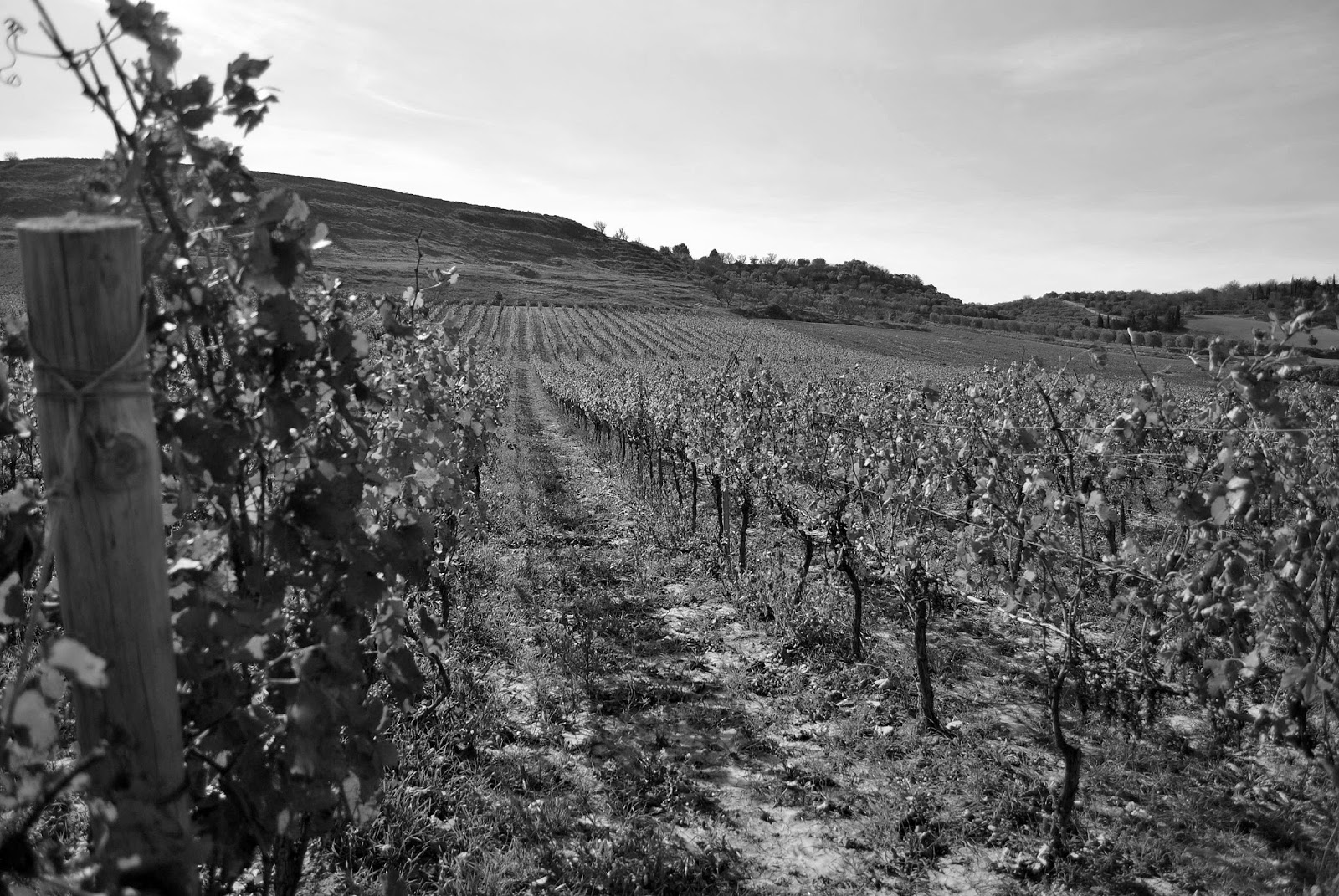
Botromagno, the art of making wine

“Dear Sir, I'd be pleased to interview you in regard of your activity of wine making...”. 

10 days ago I’ve e-mailed to Botromagno, a cantina located in Gravina in Puglia (Murgia). 

A couple of days later, I get the reply “Hi Antonio, I'm currently in London. I'll call you back once in Italy. Beniamino”.


Beniamino is the owner of Botromagno. We arrange an appointment on the 5th of Saturday morning.

Equipped with my camera, I arrive there in advance.

So, I have chance to talk with Matteo De Rosa, the enologist of Botromagno.


Bear in mind that Gravina in Puglia is famous all around the world because of Verdeca, a fantastic sweet white wine.


“Verdeca dates back to the Middle Age (1200). This wine comes from the combination of Greco, Malvasia and Bianco d'Alessano.” Matteo says.

He continues “In 1973 we applied to obtain the DOC for our Verdeca wine. However, we got the certification only in 1983. Additionally, we had to change its name from Verdeca to Gravina. Since 5 years, we only combine Greco and Malvasia as the Bianco d'Alessano is almost disappeared here in Gravina”.


The enologist seems to me very competent, so I take the opportunity to question him more "I'd like to know your opinion about how the Apulian wines are performing so far. I mean, are they appreciated in Italy as well as abroad?” I enquiry.


“Well, since 20/25 years ago, the Apulian wines were mainly bought by Northern Italy wine makers to adjust their own wines. Since then, things have radically changed.” Matteo De Rosa says.

Indeed, in the last two decades a new wave of Apulian wine entrepreneurs, with the right mindset, have worked hard to promoting their wine by attending international markets.

Meantime Beniamino is arrived. We shake our hands. He takes me in his factory, meanwhile he narrates me his story.


“Since 2009, the Italian wine market has been gradually shrinking due to the ongoing crisis. So, we have been forced to sell abroad an increasing number of bottles” Beniamino says.


“Before the crisis there were so many buyers on worldwide basis. Most of them managed a business on small scale, for clients who wished to find out more about cultura enoica


Nowadays, few buyers have remained. They are tremendously sensitive to the price.” Beniamino adds.

Competition in the wine market is getting higher and higher.
  
“Concerning the new markets such as India and China, things are not easy from a wine-business perspective. First of all, richness is not well distributed in those countries, despite their galloping GDP. Secondly, such countries have a strong food identity. So, it won't be easy to combine our wines with their food” Beniamino states.

Talking about the Italian wines, our strengthen is the tremendous variety of vines, which represents an unicum in the world.


In fact there're 1000 different kind of vitigni (vine variety), 600 of them certified, 300 which are being evaluated and 100 brought to life again.


None like Italy has such richness in terms of vine variety. And Apulia may rightly be considered as a typical example of such fantastic kaleidoscope.

"Would you like to see my nicest vineyard?" Beniamino asks. "Yes, I'd love to" I reply.

He drives me with his car on the bottom of the hill called Botromagno, where the ancient Silvium (now Gravina) was located. 

At the bottom of that hill there is his vineyard.


Wine making is carried out over here since the 8th century BC, as testified by archaelogical evidences.


In fact, via Appia passed by Silvium. As result of this, a busy trading of vine plants coming from the Hellenistic world took place here. 

“We in Apulia should develop more and more the wine-tourism” Beniamino suggests. I fully get his precious tips.

It’s 12 o’clock. Time just flies away.

“Thanks Beniamino, your narration was really interesting. Your inputs very much appreciated. I’m going to write the article and send you the link by e-mail.” I say.

“Thanks” He says. “Hold on a moment” he adds. He fetches a bottle of rosè and hands it over me. “This is for you. It’s made by a Nero di Troia vineyard old 50 years”. Beniamino says. I have dedicated to Lucia, my daughter. 


Beniamino, this rosè is marvellous. Blessing Lucia

Ps.
Glug.it has just launched a wine contest #Raccontaciiltuovino Please, narrate your story/wine with pics, words etc.. 


Friday, 22 July 2016

Bari celebrates San Nicola

On Saturday May 7, 2016, commenced in Bari the celebration of the San Nicola's relics.

From a historical perspective, the relics were seized from the burial in Myra (Turkey) in spring 1087 by 62 sailors, who departed from Bari with this specific goal.

Venice, the Serenissima, was eager to grab the relics of San Nicola either. 

However, baresi were quicker than venetian.


I missed big time the atmosphere I always  breathe once in Bari. 

So, Lucia and I took straight away this opportunity to visit it. 

We leave Altamura, where we live, in the afternoon, heading to Bari.


I drop a message to Marco, an old friend of mine, whom I don't see since ages. 


Marco is a barese doc. We used to play football together.

He always dressed the Bari jersey. He is one of the most passionate football fan I have ever met.   


By the way, meantime I write this post, I'm cooking an aubergine on pan, so I have to take a break and check it out, avoiding that the aubergine gets burned.

Marco replies to my message, he is in Bari, so we are going to catch up and spend the night all together.

I park the car far away from the city centre.

Never mind, Lucia and I walk for ten minuets before getting on bus, which brings us to Bari vecchia (old Bari). 

Walking throughout Bari vecchia is a unique experience.


People who live there seem comforted by the fact that is not left alone.


The atmosphere is sparkling.

Thousands of people are being gathered in town.


Dozens of fornacelle, authorised and not, are spread all around, making the city centre looking like a souq.


By the way, fornacella is synonymous of street food.


In such times, Bari really seems like any other Middle-Eastern city laid on the Mediterranean sea. 


Following the seaside, we arrive at El ciringhito, a place where  hundreds of lads, Italians and not, catch up to drink beer, talk and smoke a joint.


I strongly recommend you to experience it

The historical parade is just great.

The climax is reached when a wooden caravel carries on the San Nicola's paint, hold by two sailors.


It's around 10.30 when some of us feel to eat something.

"Let's have a pizza at Dregher" Marco proposes.

This is a very popular pizzeria in the hearth of Bari.

This place is fantastic because the pizza maker sings while preparing pizza.

It's really cool.


Additionally, the two waiters who serves at the table are so funny.

I asked them to be portrayed and they proudly accepted it.  


From my point of view, the pizza there is not that great.

However, the experience is definitely worth it.


Ps.
As you can, I have edited my pics black/white.

I have come to such choice because inspired by the way two great photographers work: Tano D'amico and Sebastiao Salgado


Thursday, 12 May 2016

University of Foggia: Romano Luperini's lectio on "literature and crisis"

The University of Foggia has hosted on Thursday 12th May Prof. Romano Luperini, who has held a lectio on "literature and crisis."


Who's Romano Luperini, though?

He is professor of Modern and Contemporary Italian literature at the University of Siena. Additionally, he teaches at the University of Toronto.


During the years of Autunno caldo (1969-70), he was member of the far left movement (sinistra extraparlamentare).


Romano Luperini established with Luciano della Mea the "Lega dei Comunisti Pisani", an organization which will then flow into Democrazia Proletaria.

Let's get back to the Prof's lectio.

I had never been before at Department of Humanities of University of Foggia before.

The building is renewed and well kept.

The auditorium is plenty of students, though.

I walk towards the teaching post hunting for a seat.

Unfortunately, none of the seats are free, so I follow the example of those students who sit on the floor.

Suddenly, a guy hands me out a seat. "What a gentleman!" I think to myself.

If I had been a woman I'd have fallen in love with him.


According to the newspaper Il Sole 24 Ore, the University of Foggia is one of the best performing Public Universities of the South of Italy.


In fact, it's placed in the 36th position on a national scale, whereas in Apulia Lecce is 51st and Bari 60th.


"Crisis (from the Greek word κρíσις) means transformation. Nowadays, modernity and crisis correspond, in the sense that today things change quickly, whereas, for example, in the Middle Age permutations would have occurred after decades or even centuries." Prof begins.


According to Prof. Luperini, modernity from a literature perspective, includes writers such as Verga, Svevo, Gadda, etc.

Post-modernity coincides with globalization. Therefore, it refers to the last 3 decades.

Today, we are experiencing the hyper-modernity.

The digital revolution which occurred between '70ies and '80ies has completely transformed the capitalistic economy.

Previously, western economies were connotated by goods. Today, by language.

Prof Luparini continues "Nowadays, the intellectuals are not needed anymore. In order to understand facts or events, TV calls to debate specialized people such as psychologists, sociologists and so on."


"In Italy, the cult book of the hyper-modern society is Gomorra. This book has been wrongly connotated as neorealista. However, the language of Gomorra is different from neorealismo." He says.


"Just to be clear, Saviano is a journalist. So, fading the role  of intellectuals in society, it's the entire literary civilization to die." The prof. adds.

"During the modernity times, the intelligentsia, compounded by 200/300 intellectuals, were able to affirm the promotion of a book, the rise of an intellectual. This role is now played by television."

In my opinion, internet is partly dethroning television in this sense.


"My students who graduated over the last 15 years, have all of them migrated abroad to work. Indeed, it's emerging a new figure of intellectual, which may be personified by Giulio Regeni, who was doing a Cambridge PhD." Prof. Luperini states.

"Today, the dispute between rich vs poor countries will indelibly mark the destiny of humanity. However, we may expect something new, unpredictable by the alliance of people like Giulio Regeni and immigrants' sons who study in Italy. These two categories, combined, have a great potential, and may be able to surprise us." 

A long and clangorous applause erupts at the end of his speech.

I'm glad for having taken part to this event.

I have got so many inputs to think about.

Thanks Professor, thanks University of Foggia.

Tuesday, 26 April 2016

Altamura, "Federicus" and Philippe Daverio

On 23rd, 24th and 25th April, Altamura hosts the 5th edition of "Federicus", a Medieval festival dedicated to Frederick II the Swabian.


So, Altamura pays tribute to the king who actually has rebuilt the town, as reported in the banner of the municipality (Federicus me reparavit).


In my opinion, the main goal scored through this festival is having the community more aware of her own roots.

Rediscovering our roots make us more aware of our identity. 

Identity is an awkward topic, in a globalized world, with millions of human beings leaving their own country to move either to Europe or America.

The leit motif of the ongoing festival is superstition.

Therefore, a panel of eminent guests were invited on 20th April to debate about it at the Mercadante theater: Rosanna Galantucci, Giacinto Forte, Francesca Ferrulli, Philippe Daverio, Alessandro Amapani and Fabrizio Vona.


Among them, there is Philippe Daverio (pictured), very popular in Italy thanks to his personal way to communicate art: smart and never pedantic. 


Additionally, he has presented for years passepartout, a successful television program broadcasted by RAI.

Once on stage, Philippe, surrounded by flags red and white, colours which symbolize the Municipality of Altamura, turn to the Mayor and ask him: "what do red and white mean? Do they represent the compromesso storico?"

Coming back to Frederick II, Philippe Daverio says "according to Le Goff, in the 13th century, beside the two powers represented by army and church, a third category called scriptorium (intellectuals) took place in France and quickly spread all around Europe".


"This represents a turning point which Frederick II acknowledges immediately, and applies it to his own kingdom". 

He continues "However, if the South of Italy has remained stuck to agriculture, instead of developing towards the rising capitalism, that's the Swabian's fault".


He says "I wish to mention a brilliant book, Uncommon sense. According to the author, in the past there were two figures, prophets and philosophers. Ancient Greece has given the birth to philosophers, whom thinking has forged the European culture".


"During the Middle Age, Arabics were forward-thinking. Indeed, among them superstition was forbidden, whereas science and philosophy were incentivated. Just to make an example, zero was introduced to Europe by the Arabics." Philippe adds.

He says "Finally, when Frederick II realizes that his ascendence may not be enough to rule over the Arabics of Sicily, then he persecute them, either killing or deporting them to Lucera, in Apulia".

The conference goes on for a couple of hours.

I quit the theater with so many causes for reflection.

The festival reaches its climax on the 24th, though.

The locals feels very much responsible for the positive outcome of the historical reenactment.

The atmosphere is sparkling: musicians, jugglers, walkers-on, twirlers. 

There is everything which tourists may look for.


Finally, I strongly recommend you to experience Federicus next year.


Ps.
Click here, should you wish to view more pics


Thursday, 14 April 2016

Majolicas of Laterza

This morning I moved to Laterza, a small town located in the province of Taranto.


As the Lucia's mum had to buy a new dress there, I have driven both of them to the shop.

I am not really interested in fashion maters, therefore, I quit the shop after few minutes and head straight to the city center.

Italian city centers are like an open air museum, where it's possible to view their historical stratification.  

I have been told that Laterza has something unique: a place called taverna degli spagnoli as well as the recent MuMa, museum of majolicas.

Taverna degli spagnoli, which may be translated to "Spanish tavern".

The IAT (tourist office), located within the local castle, it's warm and cozy.


"Good morning, I have called yesterday because I'd like to visit taverna degli spagnoli" I say.

"Sure, no problem" Nicola replies.

"The ticket costs 5 euros. We can go there whenever you wish. Additionally, we have here the MuMa which hosts a permanent exhibition of majolicas made in Laterza, from 14th to 19th century. It's free entry" he states.


"Cool!" I think to myself. 

"I wish to see first the MuMa, then, the taverna" I tell him.


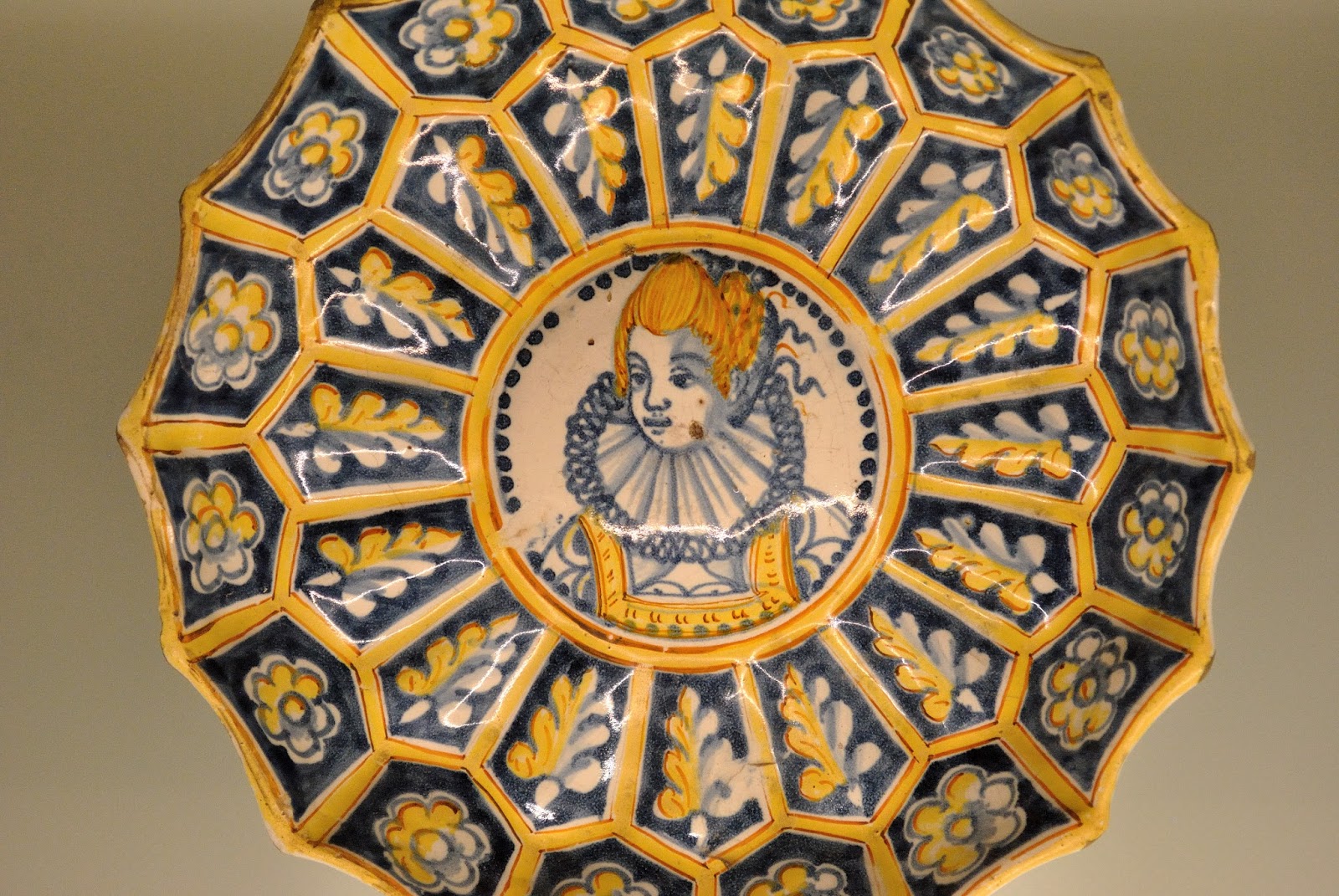
I have always heard about the beauty of majolicas made in Laterza. However, I would have never expected to see so outstanding artifacts.

The ones below are just a taste of what is displayed.


According to Wikipedia, majolicas have been invented by Egyptians.

The first artisans to produce majolica in Italy were in Palermo in the 10th century.

Arabs introduced it in Sicily. 

A couple of centuries later, Faenza became one of the worldwide center of majolica. 

According to Nicola, during the 18th century, there were in Laterza around 40 maiolicari (artisans who manufacture majolicas).

Today there are just 4 left.

At that time, the buyers were families in the upper class. So, this explains why the local majolicas were so sophisticated, so enchanting.


According to the book La Ceramica di Laterza nella collezione Tondolo (edited by Guido Donatone, published by Mario Congedo Editore) the items displayed at MuMa have been collected by Riccardo Tondolo.  


 Riccardo Tondolo (pictured on the left) has been seeking Laertian majolicas all around the world for decades.


The local community owes a lot to this man.

The oldest items shown at MuMa date back to the 14th century.


After having completed the tour at MuMa, I still feel inebriated.

"Ah, what a nice sensations art let you experience" I think to myself.

"Nicola, I am ready to view the taverna" I address him.

"Ok, let's go" the guide replies.


A blonde lady is with us, her name is Wanna. 

Like Nicola, she is from Laterza too (both of them pictured).  


Walking through the city center, we bump into some interesting places: 


a building owned by aristocrats  


The oldest public fountain


finally, an emblem which echoes the Borboni one 


We arrive at Taverna degli Spagnoli.

"This is supposed to be the ancient Byzantine church of St. Pietro" Nicola says.

"Then, this place turned to be a place of initiation of the Spanish dinasty Perez-Navarrete, which inherited Laterza in 1655".

Perez-Navarrete was a Spanish-Neapolitan family

Nicola adds "We suppose that the Spaniards used this place to recruit new soldiers".

Indeed, we see written on the top of the wall: chi vol haver il soldo, Hor qui s'accosti al capitano, which stands approximately for "Those who seek for money, come here close to the captain".

The taverna is plenty of frescos which our guide ascribe to local artists of the 17th century.


If you wish to find out more about this place, I suggest you this book La "cantina spagnola" di Laterza. I Perez Navarrete feudatari ed il Viceregno spagnolo, edited by Raffaella Beniamino, published by Congedo editore.


The below two pictures show:


a lady (centre) dancing with two men...


and Spanish soldiers


The tour is going to end up.

I have chance to exchange few words with Wanna. 

She is back in Laterza after having worked a couple of years abroad.

Our land strongly needs educated and experienced people.

Please, let me spend few words on how great people of tourist office areNicola and his colleagues, young and well trained, are great professionals who work with passion.

Additionally, I wish to highlight the efforts of Laterza administration in promoting its immense cultural and environmental heritage. Well done!  

Enjoy Laterza, then.

Ciao


Ps. 
Click here, should you wish to view more pics