Showing posts with label Apulia. Show all posts

Saturday, 18 November 2017

An Apulian in Amsterdam

It's my first time in Amsterdam.

I'm so excited about it!

What I expect to view in The Netherlands? Tulips, windmills, bicycles and the Van Gogh's paints, just to mention some of the main Dutch symbols.


Of course, I have spotted much more in Amsterdam than what I've mentioned above. 

However, I won't reveal everything because I'd like you to visit this fantastic country and discover it by yourself.


Founded by Dutch fishermen in 13th century, Amsterdam, in my point of view, epitomizes a place where civil rights are being sheltered. 


Religious minorities such as the Spanish and Portuguese Jews persecuted in the Middle Age by the bloody Holy Inquisition, had successfully settled in The Nederlands.

The newcomers had found a new place where to carry on peacefully their own activities such as diamond cutting, for which Holland still covers a crucial role on worldwide basis.

Walking through the city center is a unique experience.


I'd recommend you to purchase a ticket and get on board on one of the boats which take you along the canals.

Depicting Amsterdam like the "Venice of the North" not only would it be disrespectful, but also misleading.

In fact, the main difference between Venice and Amsterdam is that the former is steadily dying, sold to tourists; whereas the latter is plenty of people, especially youngsters.

I must confess that I have never seen so many people riding a bicycle to move around. I could not believe it.

Risultati immagini per bicycles in amsterdam


Thousands and thousands of people, kids and adults, women and men, dressing either smart or casuals clothes, riding their own bicycle: this is like a dream which has come true.

Therefore, the Dutch society is showing the direction to save mankind from self-destruction. 

Of course, there are dedicated paths and infrastructures which represent a fantastic incentive to use bicycles. 

Beside bicycles, Amsterdam is equipped with so many power suppliers for electric cars. As result of this, its city center is incomparably less polluted than any Apulian cities such as Altamura, Manfredonia and so on. Yes, it's true.

I have spent in Amsterdam three days. Walking has been my way to discover the city. I have walked for hours, from morning till sunset. I could not get enough of it, even though I felt wrecked at evening.

If you walk in town, it may happen to smell weed.

Marijuana it is freely sold in coffea-shops which actually pay taxes to the Dutch State (and not to criminal organizations as it occurs in Italy!) as well as the prostitution industry does over here. 

The sense of community experienced in Amsterdam is astonishing. 
Just to make an example, you often see a bench placed right outside private houses, provided by the owners themselves, so that whoever feels tired can take a rest.


Isn't this amazing? Yes, definitely it is.

Visiting the Jordaan quarter is a must! It hosts an endless market worth of being experienced.

You cannot come to Amsterdam without admiring the art produced by the Dutch masters.


Personally, I have opted for the Van Gogh's museum.

Admiring his paintings is a valid reason to travel to Amsterdam. 


Risultati immagini per bicycling in amsterdam


Amsterdam, sweet Amsterdam, I have fallen in love with you...


Wednesday, 9 November 2016

Botromagno, the art of making wine

“Dear Sir, I'd be pleased to interview you in regard of your activity of wine making...”. 

10 days ago I’ve e-mailed to Botromagno, a cantina located in Gravina in Puglia (Murgia). 

A couple of days later, I get the reply “Hi Antonio, I'm currently in London. I'll call you back once in Italy. Beniamino”.


Beniamino is the owner of Botromagno. We arrange an appointment on the 5th of Saturday morning.

Equipped with my camera, I arrive there in advance.

So, I have chance to talk with Matteo De Rosa, the enologist of Botromagno.


Bear in mind that Gravina in Puglia is famous all around the world because of Verdeca, a fantastic sweet white wine.


“Verdeca dates back to the Middle Age (1200). This wine comes from the combination of Greco, Malvasia and Bianco d'Alessano.” Matteo says.

He continues “In 1973 we applied to obtain the DOC for our Verdeca wine. However, we got the certification only in 1983. Additionally, we had to change its name from Verdeca to Gravina. Since 5 years, we only combine Greco and Malvasia as the Bianco d'Alessano is almost disappeared here in Gravina”.


The enologist seems to me very competent, so I take the opportunity to question him more "I'd like to know your opinion about how the Apulian wines are performing so far. I mean, are they appreciated in Italy as well as abroad?” I enquiry.


“Well, since 20/25 years ago, the Apulian wines were mainly bought by Northern Italy wine makers to adjust their own wines. Since then, things have radically changed.” Matteo De Rosa says.

Indeed, in the last two decades a new wave of Apulian wine entrepreneurs, with the right mindset, have worked hard to promoting their wine by attending international markets.

Meantime Beniamino is arrived. We shake our hands. He takes me in his factory, meanwhile he narrates me his story.


“Since 2009, the Italian wine market has been gradually shrinking due to the ongoing crisis. So, we have been forced to sell abroad an increasing number of bottles” Beniamino says.


“Before the crisis there were so many buyers on worldwide basis. Most of them managed a business on small scale, for clients who wished to find out more about cultura enoica


Nowadays, few buyers have remained. They are tremendously sensitive to the price.” Beniamino adds.

Competition in the wine market is getting higher and higher.
  
“Concerning the new markets such as India and China, things are not easy from a wine-business perspective. First of all, richness is not well distributed in those countries, despite their galloping GDP. Secondly, such countries have a strong food identity. So, it won't be easy to combine our wines with their food” Beniamino states.

Talking about the Italian wines, our strengthen is the tremendous variety of vines, which represents an unicum in the world.


In fact there're 1000 different kind of vitigni (vine variety), 600 of them certified, 300 which are being evaluated and 100 brought to life again.


None like Italy has such richness in terms of vine variety. And Apulia may rightly be considered as a typical example of such fantastic kaleidoscope.

"Would you like to see my nicest vineyard?" Beniamino asks. "Yes, I'd love to" I reply.

He drives me with his car on the bottom of the hill called Botromagno, where the ancient Silvium (now Gravina) was located. 

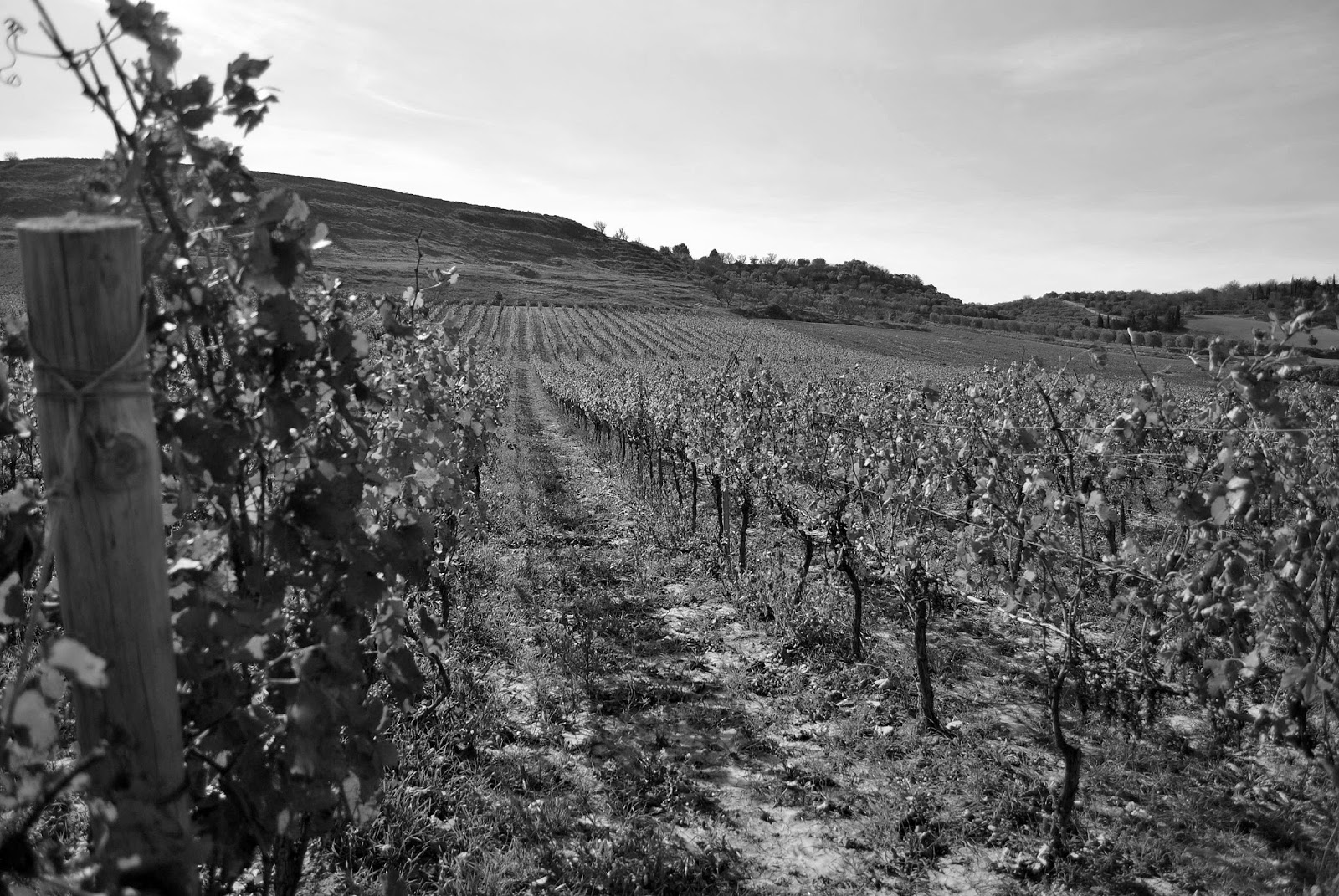
At the bottom of that hill there is his vineyard.


Wine making is carried out over here since the 8th century BC, as testified by archaelogical evidences.


In fact, via Appia passed by Silvium. As result of this, a busy trading of vine plants coming from the Hellenistic world took place here. 

“We in Apulia should develop more and more the wine-tourism” Beniamino suggests. I fully get his precious tips.

It’s 12 o’clock. Time just flies away.

“Thanks Beniamino, your narration was really interesting. Your inputs very much appreciated. I’m going to write the article and send you the link by e-mail.” I say.

“Thanks” He says. “Hold on a moment” he adds. He fetches a bottle of rosè and hands it over me. “This is for you. It’s made by a Nero di Troia vineyard old 50 years”. Beniamino says. I have dedicated to Lucia, my daughter. 


Beniamino, this rosè is marvellous. Blessing Lucia

Ps.
Glug.it has just launched a wine contest #Raccontaciiltuovino Please, narrate your story/wine with pics, words etc.. 


Sunday, 11 September 2016

Barletta and his sons

Friday 2 September, I have met in Barletta a good friend of mine, Massimo Lunardelli.

I know him since I was in Turin,  20 years ago.


He was invited in Barletta to present his documentary Carlo Cafiero, il figlio del sole as the 1 September occurred the 170s anniversary of Carlo Cafiero's birth.


Cafiero was an anarchist. Born in Barletta, he came from one of the most prominent Apulian families. 


To pursue his ideals, Cafiero drove his family to the brink of bankruptcy:  he had subsidised the building of a fantastic villa in Locarno (Switzerland), fronted onto the lake, where Bakunin and other European anarchists convened.

One of the facts unveiled by the Massimo's doc is that Bakunin contributed to drive Cafiero crazy, because of his continuos request of money. Just to make an example, once Bakunin arranged fireworks, again with Cafiero's money, to welcome his own wife. 

Finally, Cafiero will be admitted to mental hospital and interdicted by his own family, in order to avoid that he fully squandered the family's assets.      


Cafiero was close friend of Giuseppe De Nittis, renowned impressionist painter who gained glory and fame in Paris. 


"Would you like to come along with me and visit the De Nittis gallery here in Barletta?" I ask Massimo.

"Yes, sure" he says.


We catch up just outside the Della Motta's building, where the permanent exhibition is hosted.


"In terms of foreign tourists, many French come here. Followed by Germans" The guide admits.

The De Nittis' paints are incredibly fascinating. 

The colours, the light are impressive.


After having seen the exhibition, we get out hunting for some food.

"You know, I'm reading an intriguing book, I Beati Paoli, by Luigi Natoli, published by Sellerio" I address Massimo.


"I Beati Paoli were a secret sect operating in Palermo in 18th century. They meant to defend the poor against the injustices perpetrated by blue-blooded" I continue.

I add "Someone says that mafia roots in such a sect. It may be, nevertheless, the mafia's purposes are gallantless compared to those pursued by Beati Paoli. There is no doubt about it"

It's afternoon. Massimo is tired so he prefers to retire to his B&B and rest for a while.

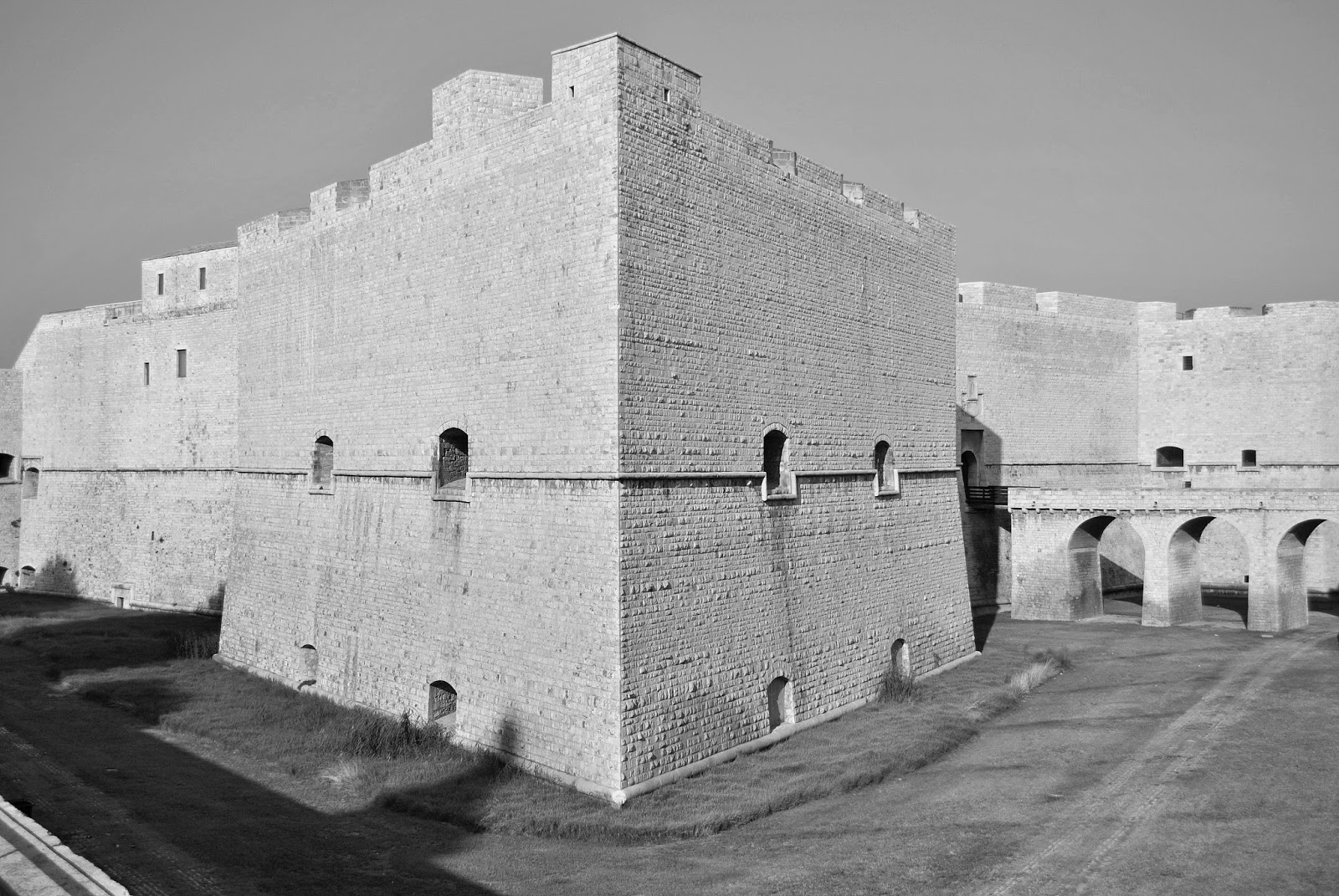
Lucia and I, head to the magnificent castle of Barletta, where is hosted an exhibition dedicated to Hannibal.


Indeed, nearby Barletta, it occurred the battle of Cannae, fought between Romans and Punics led by Hannibal. It's considered the greatest battle (read carnage) of ancient times.

There is an artefact retrieved around Campobasso (south of Italy) which catches my eye. 

It symbolises Tanit, a Punic goddess.

  
It's 7 pm.

Massimo joins us again.

I propose to go to admire the so-called giant of Barletta, a huge statue brought by the sea to the bank between Barletta and Manfredonia. 


Researchers are still unable to identify whom the statue represents.

Other Massimo friend's join us.

We are at the cappero pub, talking till late.

The plaza is plenty of people, not noisy though. 

It's 11 pm. We feel tired. It's time to leave.

I say goodbye to Massimo and others "Ciao Massimo. Take care of yourself".

Sunday, 4 September 2016

Manfredonia, Saint Andrew and procession at sea

Every year on 1 September, the community of Manfredonia celebrates Saint Andrew, protector of fishermen.


This feast follow three days dedicated to Santa Maria di Siponto, portrayed by a Byzantine icon, deeply venerated by the local community.


The celebration of Apulian Patron Saints represents more than just a religious event. It's actually a glue which holds the community together.   

I have come back to Manfredonia the 31 August to stay with my family. 

On 1 September, I take my wife to the Saint Andrew's procession at sea. 

We leave my parents' house at 4.30 and go to the harbour.

Hopefully, we will allowed to get on board.


At 5 pm is expected to begin the procession which will carry the Saint Andrew's statue around the gulf of Manfredonia.


Once at the arbour, I see a fishing boat populated by a big family.

"Good afternoon, Sir. May we join you"? I address the captain.

"Yeah sure" he replies.

A lady gets out the boat, takes my wife's hand and lead her on board.


Fishermen welcome tourists on this special occasion.

Anyone who wants to join them is benvenuto.


Another family with two children embark.

We all look forward to sail away.

I take chance to ask a couple of questions to Giuseppe, member of the crew and captain's son.  


"We fish mainly red mullets, octopus, squids, sepias, basses, gilthread brims and mazzancolle (a kind of shrimp)" He says.


Manfredonia still hosts one of the largest fleet on national scale. Actually, it counts around 250 fishing boats.


Few years ago they were 400. 

Indeed, The European Union is providing funds to all those who dismiss their own boats.

The Mediterranean is deeply suffering the impact of intensive fishing.  

Giuseppe continues "We didn't take part to the procession for a couple of years because of the death of my grandpa". 

Dozens of boats and motorboats follow the one which carries the Saint.


At certain stage, all of them get close at each other and stop.

A wreath is launched from the main boat in memory of those who have lost their life at sea.


A rolling clapping rises to the sky.

Once back to the port, we get out and leave not before having cheered up the entire crew.

I exchange my contact details with Giuseppe.

"Call me in case you need anything" Giuseppe says.

I'll definitely call him when I'll need a couple of kilos of fresh fishes.

Lucia and I don't know why, probably because of the kindness of this humble people, or because of the smell of sea, however, we feel our hearth warmed up.

As Jimi Hendrix used to say "experience it".

Friday, 22 July 2016

Bari celebrates San Nicola

On Saturday May 7, 2016, commenced in Bari the celebration of the San Nicola's relics.

From a historical perspective, the relics were seized from the burial in Myra (Turkey) in spring 1087 by 62 sailors, who departed from Bari with this specific goal.

Venice, the Serenissima, was eager to grab the relics of San Nicola either. 

However, baresi were quicker than venetian.


I missed big time the atmosphere I always  breathe once in Bari. 

So, Lucia and I took straight away this opportunity to visit it. 

We leave Altamura, where we live, in the afternoon, heading to Bari.


I drop a message to Marco, an old friend of mine, whom I don't see since ages. 


Marco is a barese doc. We used to play football together.

He always dressed the Bari jersey. He is one of the most passionate football fan I have ever met.   


By the way, meantime I write this post, I'm cooking an aubergine on pan, so I have to take a break and check it out, avoiding that the aubergine gets burned.

Marco replies to my message, he is in Bari, so we are going to catch up and spend the night all together.

I park the car far away from the city centre.

Never mind, Lucia and I walk for ten minuets before getting on bus, which brings us to Bari vecchia (old Bari). 

Walking throughout Bari vecchia is a unique experience.


People who live there seem comforted by the fact that is not left alone.


The atmosphere is sparkling.

Thousands of people are being gathered in town.


Dozens of fornacelle, authorised and not, are spread all around, making the city centre looking like a souq.


By the way, fornacella is synonymous of street food.


In such times, Bari really seems like any other Middle-Eastern city laid on the Mediterranean sea. 


Following the seaside, we arrive at El ciringhito, a place where  hundreds of lads, Italians and not, catch up to drink beer, talk and smoke a joint.


I strongly recommend you to experience it

The historical parade is just great.

The climax is reached when a wooden caravel carries on the San Nicola's paint, hold by two sailors.


It's around 10.30 when some of us feel to eat something.

"Let's have a pizza at Dregher" Marco proposes.

This is a very popular pizzeria in the hearth of Bari.

This place is fantastic because the pizza maker sings while preparing pizza.

It's really cool.


Additionally, the two waiters who serves at the table are so funny.

I asked them to be portrayed and they proudly accepted it.  


From my point of view, the pizza there is not that great.

However, the experience is definitely worth it.


Ps.
As you can, I have edited my pics black/white.

I have come to such choice because inspired by the way two great photographers work: Tano D'amico and Sebastiao Salgado


Thursday, 12 May 2016

University of Foggia: Romano Luperini's lectio on "literature and crisis"

The University of Foggia has hosted on Thursday 12th May Prof. Romano Luperini, who has held a lectio on "literature and crisis."


Who's Romano Luperini, though?

He is professor of Modern and Contemporary Italian literature at the University of Siena. Additionally, he teaches at the University of Toronto.


During the years of Autunno caldo (1969-70), he was member of the far left movement (sinistra extraparlamentare).


Romano Luperini established with Luciano della Mea the "Lega dei Comunisti Pisani", an organization which will then flow into Democrazia Proletaria.

Let's get back to the Prof's lectio.

I had never been before at Department of Humanities of University of Foggia before.

The building is renewed and well kept.

The auditorium is plenty of students, though.

I walk towards the teaching post hunting for a seat.

Unfortunately, none of the seats are free, so I follow the example of those students who sit on the floor.

Suddenly, a guy hands me out a seat. "What a gentleman!" I think to myself.

If I had been a woman I'd have fallen in love with him.


According to the newspaper Il Sole 24 Ore, the University of Foggia is one of the best performing Public Universities of the South of Italy.


In fact, it's placed in the 36th position on a national scale, whereas in Apulia Lecce is 51st and Bari 60th.


"Crisis (from the Greek word κρíσις) means transformation. Nowadays, modernity and crisis correspond, in the sense that today things change quickly, whereas, for example, in the Middle Age permutations would have occurred after decades or even centuries." Prof begins.


According to Prof. Luperini, modernity from a literature perspective, includes writers such as Verga, Svevo, Gadda, etc.

Post-modernity coincides with globalization. Therefore, it refers to the last 3 decades.

Today, we are experiencing the hyper-modernity.

The digital revolution which occurred between '70ies and '80ies has completely transformed the capitalistic economy.

Previously, western economies were connotated by goods. Today, by language.

Prof Luparini continues "Nowadays, the intellectuals are not needed anymore. In order to understand facts or events, TV calls to debate specialized people such as psychologists, sociologists and so on."


"In Italy, the cult book of the hyper-modern society is Gomorra. This book has been wrongly connotated as neorealista. However, the language of Gomorra is different from neorealismo." He says.


"Just to be clear, Saviano is a journalist. So, fading the role  of intellectuals in society, it's the entire literary civilization to die." The prof. adds.

"During the modernity times, the intelligentsia, compounded by 200/300 intellectuals, were able to affirm the promotion of a book, the rise of an intellectual. This role is now played by television."

In my opinion, internet is partly dethroning television in this sense.


"My students who graduated over the last 15 years, have all of them migrated abroad to work. Indeed, it's emerging a new figure of intellectual, which may be personified by Giulio Regeni, who was doing a Cambridge PhD." Prof. Luperini states.

"Today, the dispute between rich vs poor countries will indelibly mark the destiny of humanity. However, we may expect something new, unpredictable by the alliance of people like Giulio Regeni and immigrants' sons who study in Italy. These two categories, combined, have a great potential, and may be able to surprise us." 

A long and clangorous applause erupts at the end of his speech.

I'm glad for having taken part to this event.

I have got so many inputs to think about.

Thanks Professor, thanks University of Foggia.