Showing posts with label wine. Show all posts

Wednesday, 9 November 2016

Botromagno, the art of making wine

“Dear Sir, I'd be pleased to interview you in regard of your activity of wine making...”. 

10 days ago I’ve e-mailed to Botromagno, a cantina located in Gravina in Puglia (Murgia). 

A couple of days later, I get the reply “Hi Antonio, I'm currently in London. I'll call you back once in Italy. Beniamino”.


Beniamino is the owner of Botromagno. We arrange an appointment on the 5th of Saturday morning.

Equipped with my camera, I arrive there in advance.

So, I have chance to talk with Matteo De Rosa, the enologist of Botromagno.


Bear in mind that Gravina in Puglia is famous all around the world because of Verdeca, a fantastic sweet white wine.


“Verdeca dates back to the Middle Age (1200). This wine comes from the combination of Greco, Malvasia and Bianco d'Alessano.” Matteo says.

He continues “In 1973 we applied to obtain the DOC for our Verdeca wine. However, we got the certification only in 1983. Additionally, we had to change its name from Verdeca to Gravina. Since 5 years, we only combine Greco and Malvasia as the Bianco d'Alessano is almost disappeared here in Gravina”.


The enologist seems to me very competent, so I take the opportunity to question him more "I'd like to know your opinion about how the Apulian wines are performing so far. I mean, are they appreciated in Italy as well as abroad?” I enquiry.


“Well, since 20/25 years ago, the Apulian wines were mainly bought by Northern Italy wine makers to adjust their own wines. Since then, things have radically changed.” Matteo De Rosa says.

Indeed, in the last two decades a new wave of Apulian wine entrepreneurs, with the right mindset, have worked hard to promoting their wine by attending international markets.

Meantime Beniamino is arrived. We shake our hands. He takes me in his factory, meanwhile he narrates me his story.


“Since 2009, the Italian wine market has been gradually shrinking due to the ongoing crisis. So, we have been forced to sell abroad an increasing number of bottles” Beniamino says.


“Before the crisis there were so many buyers on worldwide basis. Most of them managed a business on small scale, for clients who wished to find out more about cultura enoica


Nowadays, few buyers have remained. They are tremendously sensitive to the price.” Beniamino adds.

Competition in the wine market is getting higher and higher.
  
“Concerning the new markets such as India and China, things are not easy from a wine-business perspective. First of all, richness is not well distributed in those countries, despite their galloping GDP. Secondly, such countries have a strong food identity. So, it won't be easy to combine our wines with their food” Beniamino states.

Talking about the Italian wines, our strengthen is the tremendous variety of vines, which represents an unicum in the world.


In fact there're 1000 different kind of vitigni (vine variety), 600 of them certified, 300 which are being evaluated and 100 brought to life again.


None like Italy has such richness in terms of vine variety. And Apulia may rightly be considered as a typical example of such fantastic kaleidoscope.

"Would you like to see my nicest vineyard?" Beniamino asks. "Yes, I'd love to" I reply.

He drives me with his car on the bottom of the hill called Botromagno, where the ancient Silvium (now Gravina) was located. 

At the bottom of that hill there is his vineyard.
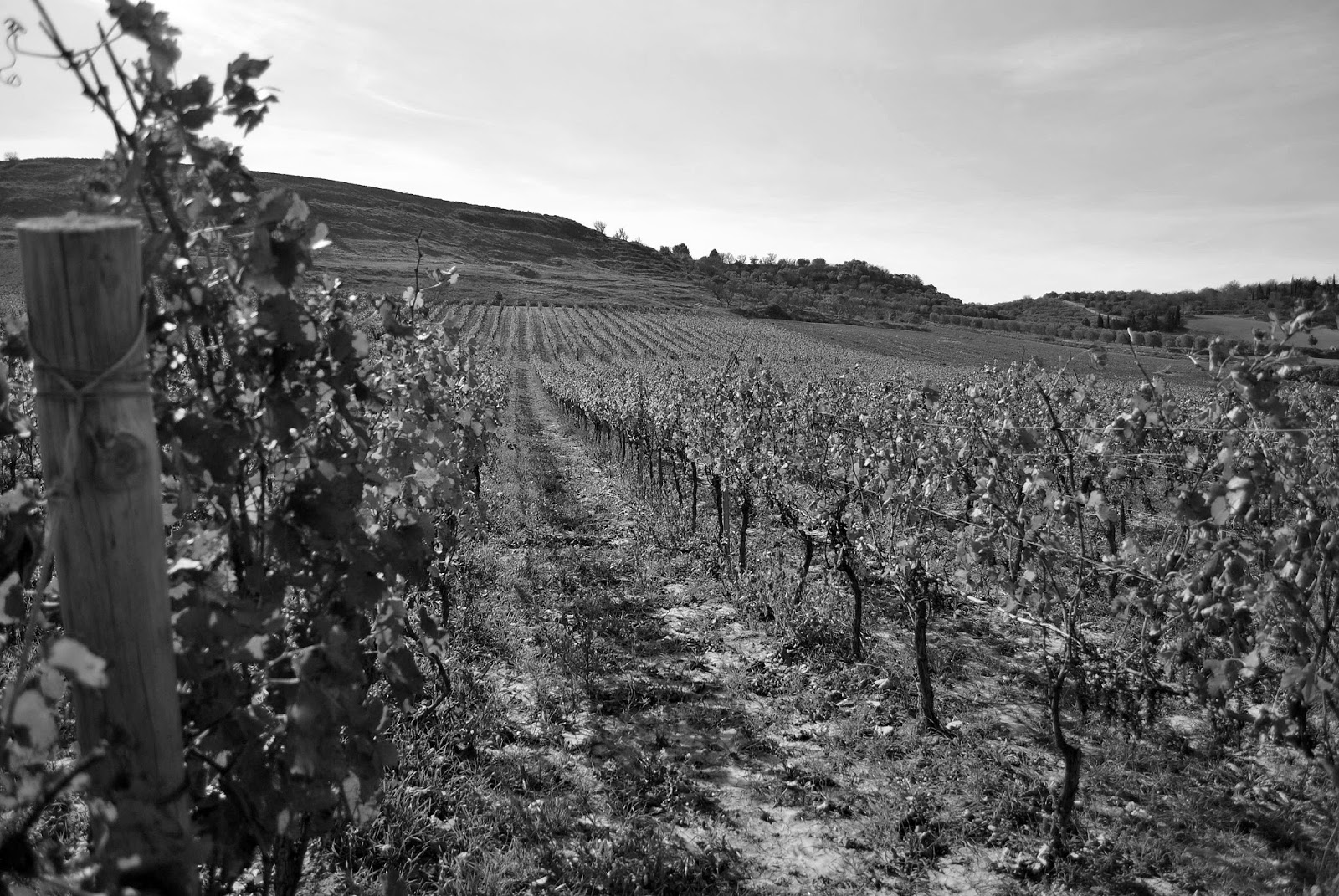


Wine making is carried out over here since the 8th century BC, as testified by archaelogical evidences.


In fact, via Appia passed by Silvium. As result of this, a busy trading of vine plants coming from the Hellenistic world took place here. 

“We in Apulia should develop more and more the wine-tourism” Beniamino suggests. I fully get his precious tips.

It’s 12 o’clock. Time just flies away.

“Thanks Beniamino, your narration was really interesting. Your inputs very much appreciated. I’m going to write the article and send you the link by e-mail.” I say.

“Thanks” He says. “Hold on a moment” he adds. He fetches a bottle of rosè and hands it over me. “This is for you. It’s made by a Nero di Troia vineyard old 50 years”. Beniamino says. I have dedicated to Lucia, my daughter. 


Beniamino, this rosè is marvellous. Blessing Lucia

Ps.
Glug.it has just launched a wine contest #Raccontaciiltuovino Please, narrate your story/wine with pics, words etc.. 


Tuesday, 14 July 2015

The crypt of the Original Sin (Matera)

Matera is invaded by tourists since it has been appointed European Capital of Culture 2019.


Matera fully deserves this significant recognition.

In fact, Matera has one of the widest Italian cultural heritage.

An example? The rupestrian churches.

According to Le Chiese Rupestri di Puglia, written by Franco Dell’Aquila and Aldo Messina, Matera has around 150 rupestrian churches, which represents the biggest rupestrian heritage between Apulia and Basilicata.

I had red on La Gazzetta del Mezzogiorno, about the increasing interest of Italian and foreigner tourists about the crypt of “peccato originale”.

This news made me tremendously curious.

Therefore, the last week end I set off to Matera to admire it.

Lucia, my partner, has called ArteZeta (320.5350910; info@artezeta.it) in order to enquiry about the access.

The customer service advised that the meeting point was the oil station located 10 km. next Matera coming from Altamura, on the way towards Potenza.

The ticket costs 8 euros.

The meeting time was at 5 pm.

We arrived few minutes earlier.


Some additional tourists were waiting for the guide, who actually arrived at 5 o’clock.


Therefore, after a brief chat, all get on car and follow the guide.

After few miles, finally we arrive at a canyon.


Parked the car under an olive tree, 100 metres and we’re in front of the crypt.

“La cripta del peccato originale dates back to between 8th and 9th century. Therefore, it is the oldest frescos among the rupestrian churches in Matera. It has been discovered 52 years ago”. The guide says.

“The cripta has been inhabited for centuries by shepherds, who used to keep in their sheepfold, light fire  and make cheese”. He continues.

The frescos have been made during the Longobard era, when they were settled in Benevento. However, the frescos have evident Byzantine’s influence.


The aim of these ancient artists who painted it, was to illustrate to illiterate people some of the most relevant part of the bible.

We see the spot of the peccato originale, a snake twisted around the tree, where the fruit passed by Eva to Adam is a fig rather than an apple.

The fig can be found in few other Christian iconography such as the Cappella Sistina’s frescos, painted by Michelangelo.

So, let’s get back to the crypt.

The Holy Virgin is represented with mellow eyes, typical of the Byzantine’s iconography.

Another intriguing aspect is that some of the Saints have six fingers, just to emphasize the fact that human beings are imperfect.

I am glad for having come here to appreciate this amazing place.

We leave the crypt not before having a brief discussion with the guide, whom I give the address of my blog.

We leave the crypt, then we stop after few hundred metres away: we get off the car to visit Dragone, a local wine maker.


After having entered in this renewed masseria, we are offered few glasses of wine with cheese by a gentle woman.

I don’t like cheese, but I definetely like good wine.

We homage the conviviality by buying two bottles of red wine “Il dono”, ten euros each.

Lucia is merry. I’m fine, ready to drive back home.

Monday, 25 May 2015

Il Maggio di Accettura, an ancestral rite


On Sunday, I went to Accettura to take part to the celebration of il Maggio di Accettura, an ancestral rite held since centuries, where a holly is grafted into a turkey oak.


The holly symbolizes a female, the turkey oak a male.

According to historians, this rite seems to be introduced by the Longobards.

Accettura is a small village located on the top of a mountain, between Matera and Potenza, in Basilicata.

As per tradition, the natives have split themselves in two teams: cimaioli and maggiaioli.

In other words, cimaioli went to the Gallipoli forest to cut down the top of a holly.

The second team, maggiaioli, moved to the Montepiano bush to uproot the most beautiful example of turkey oak.


I joined to the cimaioli, though.


I was with Lucia and some friends from Altamura.

We arrived at the main square of Accettura at around 2 pm.

We got on the shuttle after having been wating for 1 hour.

However, who cares? We have had chance to talk with some natives who infected us their joy.


Il Maggio di Accettura is so deeply felt by the community, that even emigrants from UK and Germany come back every year to celebrate it.

So, after having got out the shuttle, we joined the crowd who was carrying on the holly.

It was amazing to see people gathering around the tree, drinking and singing.


And what about those men and women (mostly men) who’ll be carrying on the holly for around 15 kilometers?

Of course, good wine was being offered to anyone.

A shepherd has offered some grappa.

He was equipped with wine and grappa. “Wine is male, grappa female” he said, with an amused smile on his face.

We have reached Accettura at 8 pm.

Therefore, we have been walking for almost 4 hours.

We have stopped every hour to let the men take a rest.

I won’t never forget il Maggio di Accettura, because people is so friendly.


And then, because this rite tells us that the environment it’s the most important thing.

We civilized as well as educated men have forgotten it.

Thank you Accettura.

PS.
the graft will be done on Tuesday, therefore you are plenty of time to arrange a last minute trip to Accettura.

Tuesday, 14 April 2015

A sunny Sunday in masseria

On Sunday the weather in Brindisi was just so beautiful: sunny and warm.


The day before, I had got an invitation from Ryan to go for lunch in one of the masseria disseminated in the Apulian countryside.

“Lucia and I will come for sure” I replied by sms.

We catch up on Sunday at 12.30 in a bar by Porta Mesagne.

We are nine of us.

Elis has booked a table in Masseria Parco di Castro.

Frankly, I begin to feel hunger, like, I reckon, all the others.

So, after a quick chat, we decide to make a move. The masseria is not that close, indeed.

We drive along the SS16. 

The masseria is located in Speziale di Fasano between Cisternino and Fasano.

I am an easy driver.

It’s my habit to drive slow. 


The reason is because I just get distracted by the landscape.

Or alternatively, because I have just seen too many times Easy Rider. 

Who knows?!


I have in my car Lucia, my companion, and Franco, a very good friend of mine.

Ryan and I call him Frankie boy because despite of his age, 49, he looks younger.

Finally, we arrive at the masseria.

We sit down on. The others order some food.

I ask for some red local wine.

The food is gorgeous.


We have some antipasti.

Then, for main course we have pasta, or alternatively, meat.

The company is great. We have some good laugh.

Laughing is therapeutic. I laugh as much as I can.  (My laugh is roaring, though. What can I do?)

According to the ancient Romans, laughing was sign of silliness: risus abundat in oram stultorum.

From this perspective, I guess the ancient Romans were just eager to conquer the world instead of enjoying their short life.

After lunch, I get out to sit down and get inebriated by the sunshine.


Masseria is a place where till 40 years ago, the landowners used to host peasants hired to work the land or just to pasture the animals.

In other words, masserie are the symbols of the peasant civilisation.

Nowadays, most of them have been converted to restaurants and B&B.

It is time to leave.

We pay our bill, 25 euros each, and get off.


I take a quick look at the chapel.


It is 5 pm.

We gotta go.

Some donkeys seem to cheer us up.


Eventually, we decide to move to Torre Santa Sabina for a quick walk by the sea.

We won’t be returning to Brindisi before 7 pm.


Today we celebrated the “art of conviviality”.


And we, in Apulia, are master of it.


Tuesday, 30 September 2014

Welcome to Manduria, land of the Primitivo wine


I have arranged an appointment at 10 with Anna, public relator of Consorzio Produttori vini di Manduria.


I have learned the Consorzio through Alceo, a magazine of enological culture edited by the Consorzio itself.


The magazine takes its name from Alcaeus of Mytilene, Greek lyric poet who wrote drinking songs.


My girIfriend Lucia and I leave Brindisi at 8 o’clock, heading to Manduria.

My plan is to visit firstly the immense archaeological park of Manduria, of which I’ll talk about in one of the next posts.

I am excited at the idea of visiting the Consorzio, which has been founded in 1932.


The Consorzio is a team of Primitivo wine makers.

Primitivo di Manduria wine is a DOC (quality assurance label).

The Primitivo grape probably arrived In Apulia with the Illyrian people more than 25 centuries ago.

The Illyrians came from the Balkans. They colonized the entire Apulia.

Those who settled down in Salento (south of Apulia) were given the name of Messapians by the Greeks. 

Therefore, Manduria hosted one of the largest Messapian community.


We arrive at the Consorzio at 11 o’clock. 

We are enchanted by seeing how beautiful and elegant is this place.


Anna is temporarily busy with some Swedish tourists.

So, Lucia and I begin to talk with Monica, a professional and smiley sommelier.


“would you like to taste some of our wines?” she asks. 

“Yes, please” we reply pleasantly surprised.

Monica let us taste the Memoria wine. 

Then, she pours in our glasses the Amoroso (rosé). 

After that we drink a glass of Madrigale. Finally one of Sonetto.


At this stage, I have to admit that I feel merry. The Primitivo wine is between 14% and 15%. I should not forget it.


I’m happy to be here.

The magic of conviviality has infected us. 


I start talking with Antonietta, a lady who comes form Milan.


She is so fond of Apulia that she has bought a property in Ostuni. “what I love of Apulia is its colors. 

Moreover, it is plenty of olive trees around here. They grow in a soil which looks to me a carpet.”

Then, we talk with some tourists who come from Torre Annunziata (Naples).


A French lady is with them. 

She speaks an excellent Italian. 

“I have had the disgrace of marrying an Italian from Torre Annunziata” she says smiling. 


Meantime, Anna joins us. We shake hands. I congratulate her on the amazing atmosphere here.  

Therefore, Anna leads us to see the Museo della civiltà del vino Primitivo.

I have the strong feeling that Anna and her colleagues are just a great team. 

Actually, they don’t just sale wine.

Their aim is higher, much higher. Anna leads people to a journey through the culture of the Primitivo wine.


“The tragic events of 1986 have given a great lesson to our country. Nowadays, Italian wine makers fully guarantee the consumers in terms of quality. “ Says Anna.

In 1986, 26 people died because of methanol added to wine by Ciravegna, a firm located in Piedmont.

Anna is a great public relator. She would be able to make anyone at ease.

We are reaching the end of the Primitivo wine tour.

Frankly, I have had great time here. I tasted excellent wines. I met very nice people, with whom I even exchanged mobile number and e-mail address.

I strongly recommend you to come to Manduria.

You definitely won’t be disappointed. 

Salute
If you wish to see more pics, please click here

Tuesday, 23 September 2014

Lucera, an Arabic town of the Middle Age


Today I am going to narrate Lucera, a city in the province of Foggia.


Lucera, located on three hills, has always played a strategic role of door to the Tavoliere delle Puglie.

Archaeological excavations proved the fact that the area was inhabited since the 3rd millennium BC.


However, Lucera became very important under the Roman rule.


In 321 BC,  the Roman army while moving to Lucera to assist their allies, walked into an ambush and were defeated by the Samnites at the battle of Caudine Forks.


However, it is in the middle age that Lucera turns into something unique in the history of Europe: an Arabic city.

How did it happen?


Frederick II the Swabian, in order to tackle the Arabic uprisings in Sicily, transferred many of them to Lugêrah (as it was pronounced in Arabic).

The Swabian guaranteed them freedom of religion.

Luceria Saracinorum became a prosperous town.

Vito Salierno, who wrote I Musulmani in Puglia e Basilicata (ed. Lacaita, 2000), states that the Arabics living in Lucera were around 40.000.

The Arabics were great artisans. 

They used to work leather and Arabic-Sicilian ceramic. 


Additionally, they grew olive trees, durum wheat, barley, legumes and grapes. Muslims also kept bees for honey.


The Arabics became the most faithful fighters under the Swabians.

I am so fascinated by this story that once in Lucera, I investigate about the remains of the Arabic age. 

A gentle lady, who works for the tourist information helped me a lot on this.

I keep walking, following the indications.

First of all, I see the immense Swabian-Angevin fortress.

Inside, there is a small Arabic castle where Frederick II used to rest, surrounded by his court.


After having left the fortress, I head to what was supposed to be the Harem of Luceria Saracinorum.

Nowadays, it is a church.


The Mosque was located where now the cathedral is. 

The Angevins destroyed it.

Then, I see two Arabic towers, incorporated by newest buildings.


While quickly moving to the Archaeological Museum, I realize that many people in Lucera have Arabic features.

The Museum is rich of Daunian and Roman objects.

However, I am there mainly to view the exhibition related to the Arabic age.


When, I see them, I feel all the beauty and the richness of this land, where so many civilizations have left important proofs of themselves.

I begin talking with an enchanted visitor.“you know, once I found in Italy a golden ring and small statue” he confides to me. “I can not describe you what I felt when I found them” he adds.

He is an admirer of the Arabic art.

I get out the Museum with great thoughts.

I stop by a restaurant for a quick lunch. So, I decide to order a bottle of local Cacc’e Mmitte di Lucera.

A great red wine, with intense flavors.


This wine is made from Uva di Troia grape (35-60%), with the addition of Montepulciano, Sangiovese and Malvasia Nera, which collectively make up between 25-35% of the blend.

In terms of food, I have a wide range of healthy dishes, typical of the peasant cuisine.

Therefore, I go for cikatielle k’a rukele e k’i fenucchjette (homemade pasta with few fresh tomatoes, local rocket and a pinch of aromatic herb name finocchietto.

I finish this post not before having mentioned an immense Italian actor, Massimo Troisi.


He has shot the movie Le vie del Signore sono finite here in Lucera.


Ciao Massimo
R.I.P