Showing posts with label cattedrale. Show all posts

Sunday, 21 September 2014

Come to Trani and have a glass of Moscato wine


Trani is one of the most appealing Apulian sea towns.


The night life is sparkling. 

People from the provinces of Bari, Foggia and BAT go there to have good time.

You find many pubs and restaurants along the quay (marina).


Many fishing boats are docked there. Therefore, if you wish to eat fresh fish you know where to go to.

I walk around the inner city and I find an interesting advise which says that Trani is a città slow

It adds: città del vivere bene (town where you can live well). 


This movement is inspired by the slow food organization.


The main aims of the città slow are:
  •         Making life better for everyone living in an urban environment. 
  •      Improving the quality of life in the  cities. 
  •      Provide inspiration for a healthier lifestyle.  
  •      Protecting the environment

Talking about the history, Trani has lived its golden age during the middle age.

Its port, well placed for the crusades, developed greatly, becoming the most important one on the Adriatic sea.

In the 12th century, some important families from the Italian Maritime Republics such as Venice, Pisa, Amalfi established themselves in Trani.


Trani hosts one of the largest Jewish community of Southern Italy.

By the 12th century, Trani already housed a large Jewish community.

We have to remember that under the Swabians, the entire South of Italy lived a time of prosperity. 

Additionally, Jews, Muslims and Catholics used to live all together in peace.

Trani was the birthplace of one of the greatest medieval rabbis of Italy: Rabbi Isaiah ben Mali di Trani (1180 - 1250)

Then, under the Anjou and Aragonese rule, the Jewish community was persecuted by the Dominicans, who notoriously played a key role during the Holy Inquisition.


For example, the Scolanova Synagogue was built in the 13th century. 

Then, it was confiscated around the 1380, and converted for use as a church.

In 2006, the building was de-sanctified by the church and returned to the Jewish community.


From a cultural and religious perspective, Apulia seems to me like Andalusia in Spain. 

Both these regions worked as connections between East and West.  

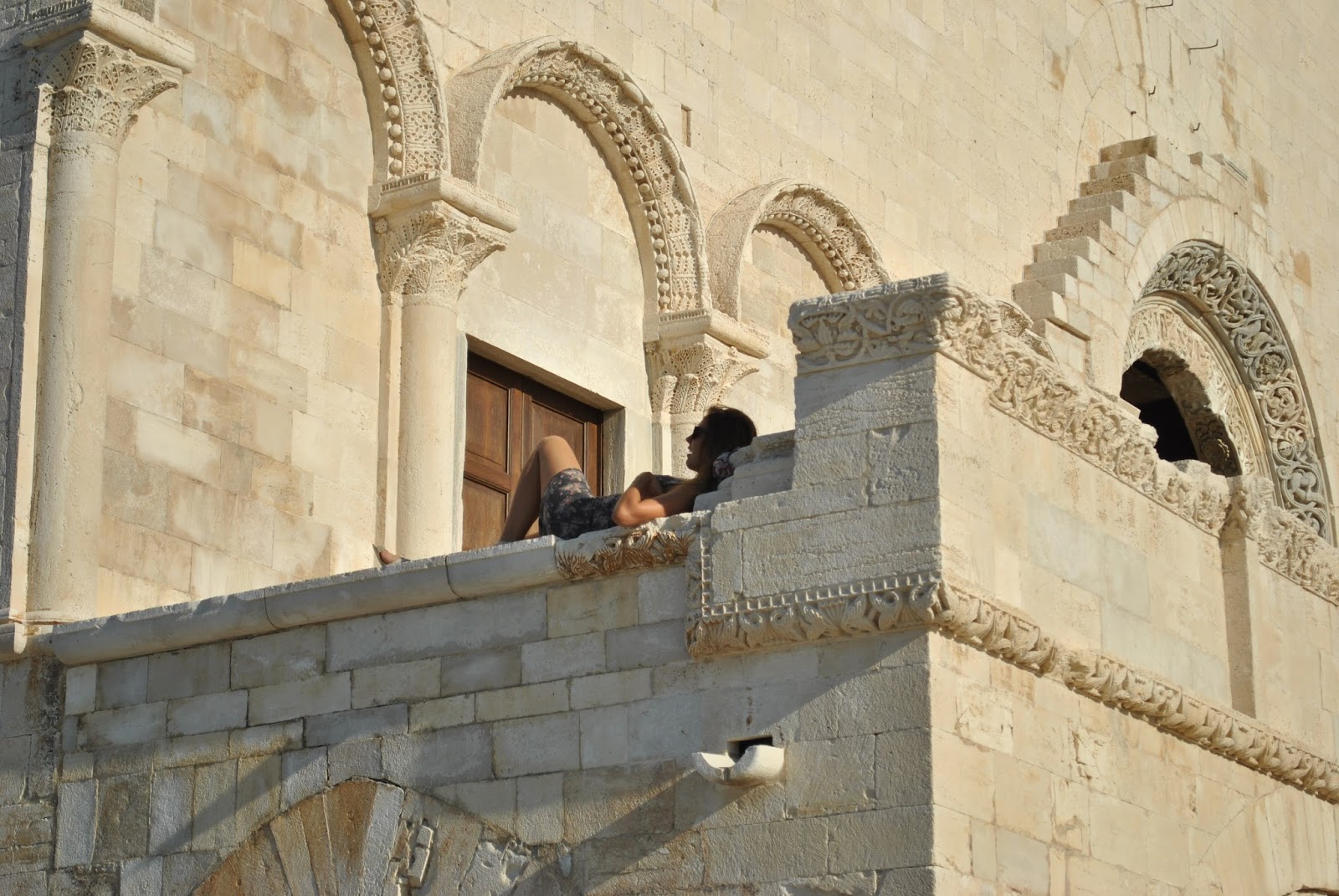
Now, let’s talk about the symbol of Trani, the Cathedral, dedicated to Saint Nicholas the pilgrim.


Built in the characteristic white local limestone, it lies on a raised open site near the sea.


The arches of the Romanesque portal are beautifully ornamented, in a manner suggestive of Arab influence.


The Swabian castle of Trani is a small jewel.


Trani is well known for its sweet white wine: Moscato di Trani.

I guarantee you that this is a faboulus wine, ideal to accompany sweets, particularly those made by almonds.


If you wish to see more pictures, please click here

Take it slow


Thursday, 11 September 2014

Canosa di Puglia, the “little Rome”

When I was 23 years old, I went to London.


I spent three weeks there in order to attend an English class.

One day, my Polish friend and I decided to not go to school. We took a day off because we had planned to visit the British Museum.

Once in, we entered the exhibitions of Greece and Rome. 

Well, I was just so astounded by seeing so many objects from Canosa, in Apulia.

“I come from this area!” I proudly said to my friend, pointing the finger at the map.


Canosa is a town located in north of Apulia.

It has roughly 5000 years of history.

Canosa was called the “little Rome” because it is located on the top of seven hills, like Rome.


The grandiose appellation was given for an historical reason as well.

The Romans, defeated by Hannibal during the 2nd Carthaginian war, were rescued by Canosa.

Finally, the Romans managed to beat Hannibal and Canosa was well rewarded: it became colonia

Additionally, the Via Traiana passed by Canosa. 

While driving toward Canosa, I just realize that there are vineyards everywhere.


It is September, so it is time to harvest grapes.


The Rosso Canosa is a very good wine, made by Nero di Troia a red grape variety grown just in Apulia.


I arrive at Canosa at 12 o’clock, quite late because of the heavy rain which I have encountered.

Therefore, I have little time to see two things: the Archaeological museum hosted in Palazzo Sinesi and the S. Sabino cathedral.

By the way, Canosa has much more to offer in terms of archaeological and cultural heritage.

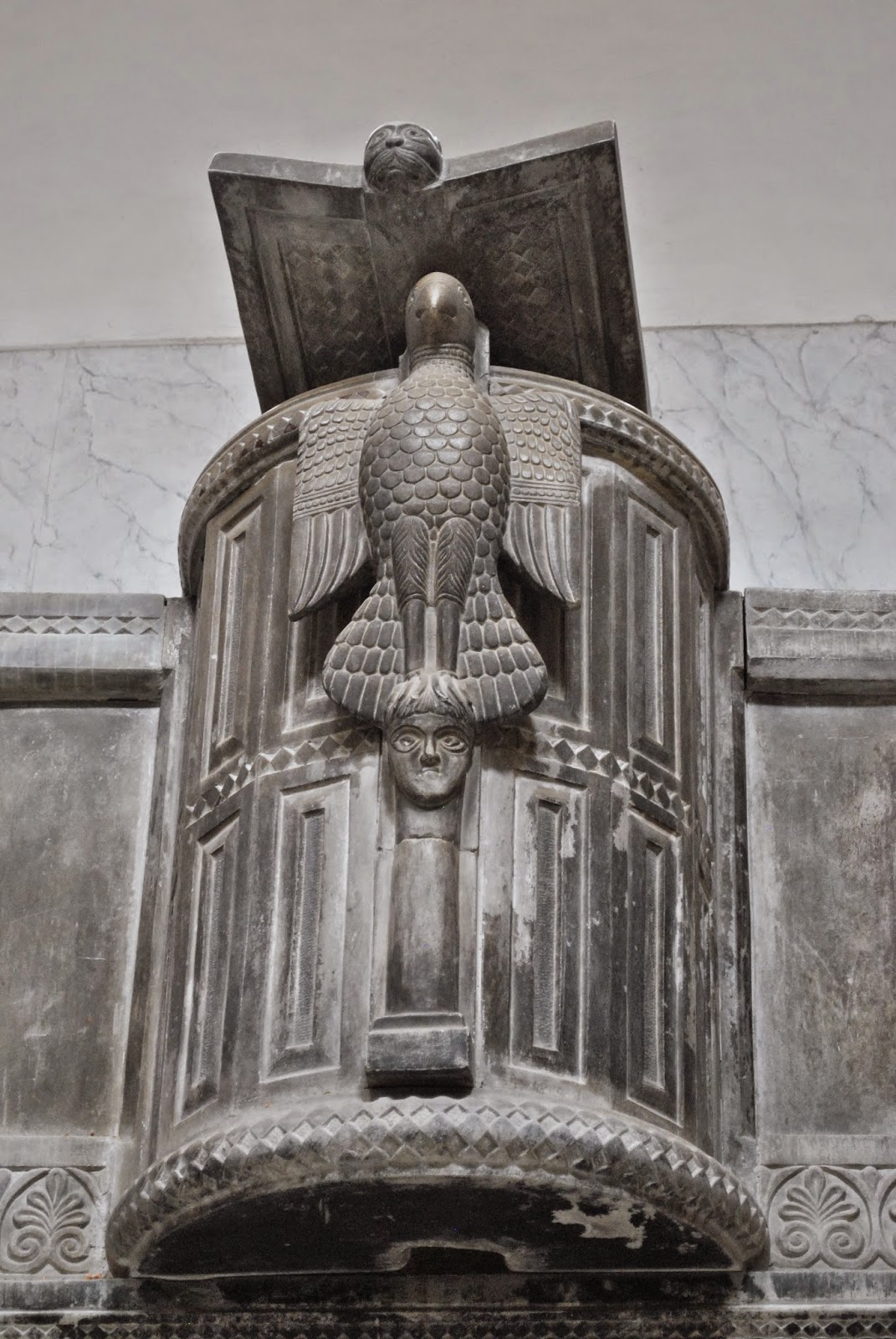
After having parked the car, I quickly move to the Cathedral, which hosts two amazing objects: the ambone and the throne with elephants.

The ambone was made by Acceptus, an Apulian Master who adorned the Cathedrals of Siponto and Monte S. Angelo as well.


On the other hand, the marble throne was manufactured by Romualdo. 

The throne has evident Oriental influence, typical example of the Romanico-Pugliese culture.


I feel shivers down my back looking at it. The throne is just so beautiful.

I would have liked to contemplate the Boemondo mausoleum, which is beside the cathedral.

Unfortunately, I do not have time. So, I promise myself to come back soon.

I get out the cathedral.

I quickly move toward Palazzo Sinesi. I look forward to see the archaeological exhibition.

I have half an hour time.

I enter Palazzo Sinesi and talk with the manager.

She says: “Canosa were manufacturing ceramic from the 8th till the 2nd century BC. In other words, it stopped with the Roman age.”


From my point of view, the nicest ceramic which I see here it is the Daunian ones. Canosa was Daunian.

The bright pink color was extracted by natural processes.  


Another unique object hosted here is the armour (4th century BC), coming from a tomb in Lavello.


Apparently, there are just 24 armours from that age spread around the world. 

Some of them come from Canosa di Puglia.

I have completed my visit. I cheer the manager and I get out.

Now, I easily walk toward the car.

I feel tired but serene.

If you wish to view more pics, please click here

Thursday, 28 August 2014

Ruvo di Puglia and the Jatta museum

Ruvo di Puglia is a town located in the province of Bari.


I want to go there mainly to see two things.

First of all, I want to see the Jatta National Musuem of Archeology which I have been told is outstanding.

Secondly, I wish to visit the Cathedral, one of the most remarkable example of Romanico-Pugliese.

I park the car in the inner city, then, I walk toward the Musuem.

The entry is free, so I appreciate it very much.

The Jatta Museum is accommodated in a 19th century palace bearing the same name.


Jatta was an aristocratic family from Ruvo.

Giovanni  and Giulio Jatta were two brothers, who in the first half of 19th century begun to collect the precious objects discovered in Ruvo.


The goal was to avoid the scattering of the artefacts, after inordinate or illegal excavations carried out in Ruvo.

The Museum hosts a permanent exhibition of more than 2000 items such as kraters, amphorae, plates, helmets and so on…


The exhibition is still exposed according to the arrangement thought of by Giovanni Jatta.

The main trait of the exhibition is represented by the red shaped ceramics dating between the 5th and the 4th century BC, both of local production, and of Greek importation.


The most interesting object is the Attican krater ascribed to the so called “painter of Talos”. 

It is a wonderful example of Greek art.


Another interesting item is a Daunian helmet.


After having visited the Museum I feel very satisfied.

Now, I head to the cathedral.


Unfortunately, it is 1.30 pm and the church is closed. 

However, I walk around the cathedral, captured bt the amazing elements which enrich the church.


The rose window (rosone) is fantastic as well as the gate.


There is a wide range of grapes cultivated in Ruvo such as the white Bombino Bianco, Malvasia Bianca, Greco and Minutolo. 

Concerning the red grapes, there are Montepulciano, Negramaro and Aleatico.

The most popular dish in Ruvo is “tiell”, a maccheroni pie in terra cotta pot cooked in the oven.

buon appetito


Post Scriptum
If you wish to view more pics, please click here