Showing posts with label Boemondo. Show all posts

Saturday, 4 April 2015

The Holy Saturday in Canosa di Puglia

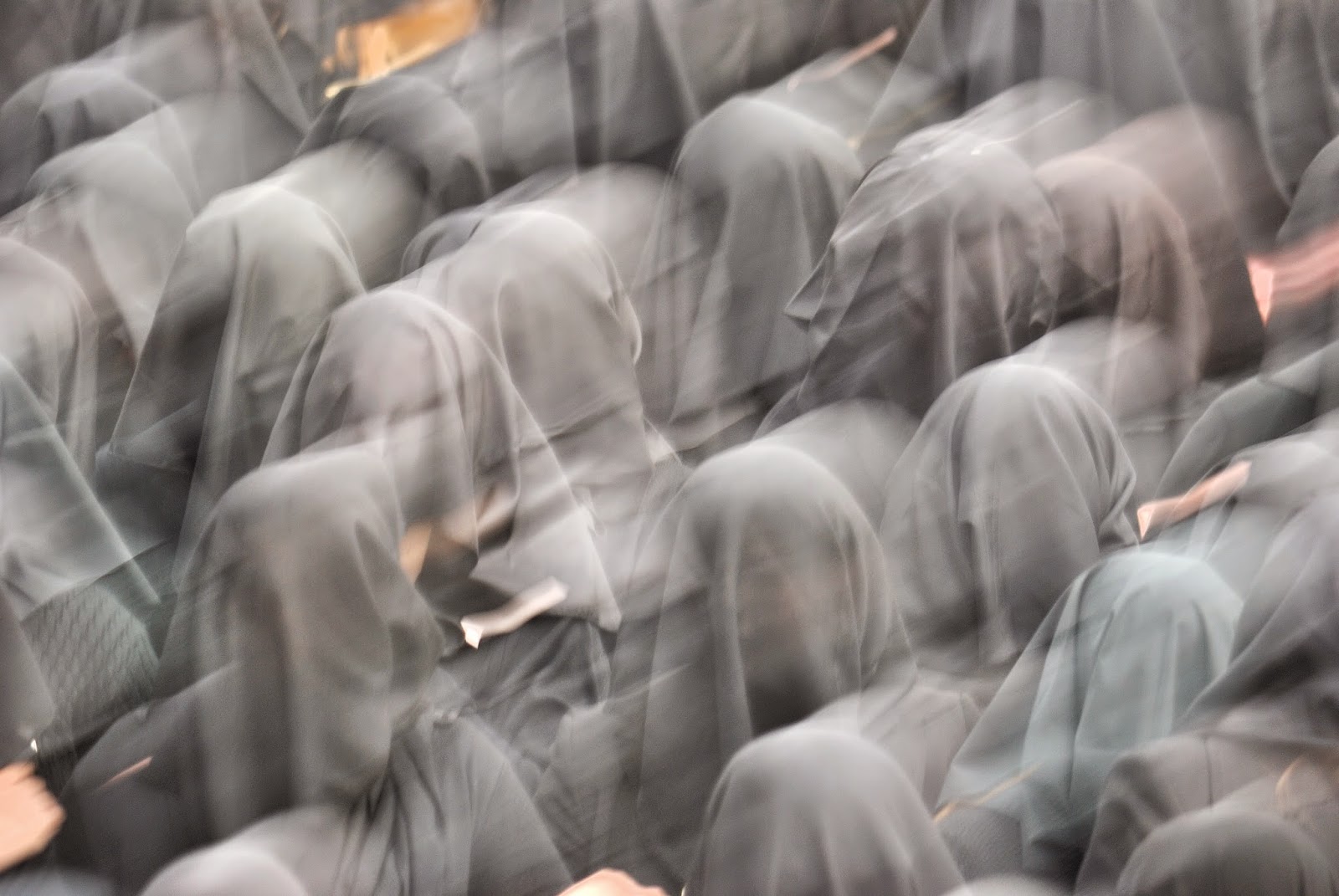
A couple of months ago, I have been told about a procession held during the Holy Saturday, when women cover themselves of black, face included.


This rite, called processione della Desolata, is celebrated in Canosa di Puglia.

These women are dressed of black as sign of desolation for the crucifixion of Jesus.

I looked forward to witness this event.


The procession of people follows the simulacrum of the Holy Virgin, portrayed with a sword stuck into the hearth.


I arrive in Piazza della Repubblica at 9.15.

My sister Erika has come along with me.

The piazza is already crowded.

I assume that it will be pretty difficult to find a place from which to take pictures.

However, I do not despair.

Walking by a small tower, I think to myself: "Who knows If I am allowed to come up".

Who cares!

So, I start climbing.

It is not so easy. I am not that fit anymore.

Finally, after having struggled for few but long seconds, I succeed in reaching the top of the tower.

It is almost two meters high.

I cheer up the people present.

"Are you a journalist" I ask.

The lady with the microphone replies: "I'm, indeed. We are reporting the procession on streaming. I work for la terra del sole".

I imagine the happiness of those who have migrated from this land, watching the processione della desolata on streaming.

The procession is getting closer and closer.

The ladies dressed of black sing a litany which touches the soul.

It is indescribable.


After having overcome the tower, the sound gets lower and lower.

However, I stay for a couple of minutes in a contemplative status.

What I have just witnessed seems to me like a tragedy.


The Greek philosopher Aristotle, had said that watching a tragedy is tremendously important, because it cleans up the soul.


How true and actual is this thought.

The journalist comes back asking me if I wish to be interviewed.

"Of course" I say, "why not".

She introduces me as a journalist who comes from Manfredonia. Fair enough.

"Why did you come here?" she asks.

"I'm here because I wished to take part to the celebration of the Holy Saturday here in Canosa. When I firstly heard of women dressed like some women do in the Arabic countries, I said to myself, you can't miss it."

The comparison to certain Arabic costumes let the journalist choke.


"Canosa is incredibly rich of art as well as of history" I carry on.

The journalist seems to be very proud of it.

Let me just point out that this town has three museums.


Beside the church of San Sabino, it is allocated the mausoleum of Bohemond I, Prince of Antiochia.


Bohemond I, Norman, son of Robert Guiscard, is known for having undertaken the 1st crusade.


A guide let us have a look at the inside of the Mausoleum.

The door is covered by decoration which vaguely look Arabic.


I may look heretical, but I guess that something of the Arabic costumes are still in the Apulian cultural heritage.

The below fan (11/12th century), exposed in one of the museum of Canosa, is decorated in Kufic.

It reports the Kufic word Al-Yumm, which stands for "happiness".


Apulia is a land where several cultural influences have taken place.

In my opinion, the Frederick II touch is still occurring in Apulia.

Born in Jesi (Marche), raised in Palermo (Sicily), Frederick II went down in history as puer Apuliae.

So, Frederick II would have been glad of watching today the processione della Desolata


PS.
Please click here, should you wish to view more pics.


Thursday, 11 September 2014

Canosa di Puglia, the “little Rome”

When I was 23 years old, I went to London.


I spent three weeks there in order to attend an English class.

One day, my Polish friend and I decided to not go to school. We took a day off because we had planned to visit the British Museum.

Once in, we entered the exhibitions of Greece and Rome. 

Well, I was just so astounded by seeing so many objects from Canosa, in Apulia.

“I come from this area!” I proudly said to my friend, pointing the finger at the map.


Canosa is a town located in north of Apulia.

It has roughly 5000 years of history.

Canosa was called the “little Rome” because it is located on the top of seven hills, like Rome.


The grandiose appellation was given for an historical reason as well.

The Romans, defeated by Hannibal during the 2nd Carthaginian war, were rescued by Canosa.

Finally, the Romans managed to beat Hannibal and Canosa was well rewarded: it became colonia. 

Additionally, the Via Traiana passed by Canosa. 

While driving toward Canosa, I just realize that there are vineyards everywhere.


It is September, so it is time to harvest grapes.


The Rosso Canosa is a very good wine, made by Nero di Troia a red grape variety grown just in Apulia.


I arrive at Canosa at 12 o’clock, quite late because of the heavy rain which I have encountered.

Therefore, I have little time to see two things: the Archaeological museum hosted in Palazzo Sinesi and the S. Sabino cathedral.

By the way, Canosa has much more to offer in terms of archaeological and cultural heritage.

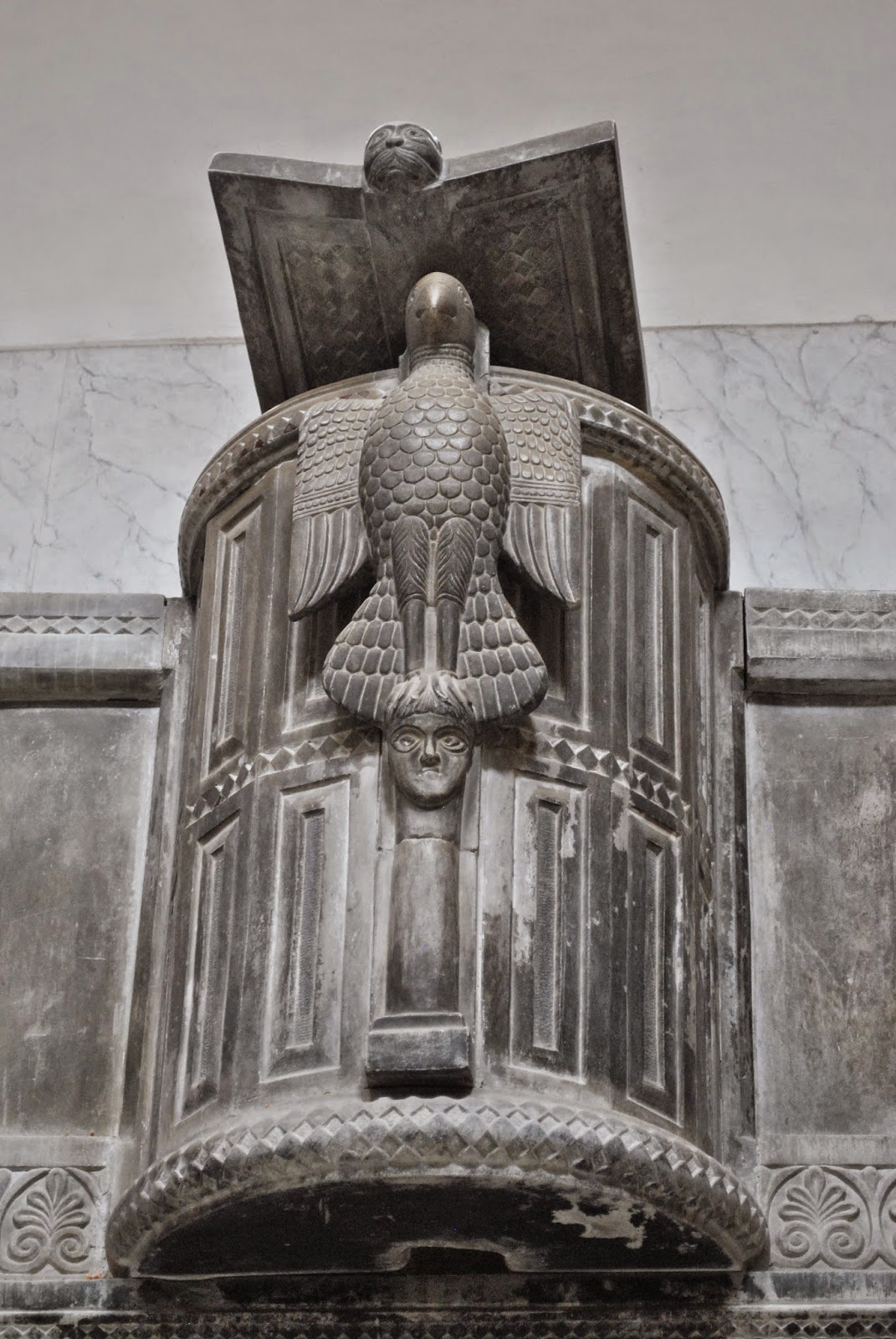
After having parked the car, I quickly move to the Cathedral, which hosts two amazing objects: the ambone and the throne with elephants.

The ambone was made by Acceptus, an Apulian Master who adorned the Cathedrals of Siponto and Monte S. Angelo as well.


On the other hand, the marble throne was manufactured by Romualdo. 

The throne has evident Oriental influence, typical example of the Romanico-Pugliese culture.


I feel shivers down my back looking at it. The throne is just so beautiful.

I would have liked to contemplate the Boemondo mausoleum, which is beside the cathedral.

Unfortunately, I do not have time. So, I promise myself to come back soon.

I get out the cathedral.

I quickly move toward Palazzo Sinesi. I look forward to see the archaeological exhibition.

I have half an hour time.

I enter Palazzo Sinesi and talk with the manager.

She says: “Canosa were manufacturing ceramic from the 8th till the 2nd century BC. In other words, it stopped with the Roman age.”


From my point of view, the nicest ceramic which I see here it is the Daunian ones. Canosa was Daunian.

The bright pink color was extracted by natural processes.  


Another unique object hosted here is the armour (4th century BC), coming from a tomb in Lavello.


Apparently, there are just 24 armours from that age spread around the world. 

Some of them come from Canosa di Puglia.

I have completed my visit. I cheer the manager and I get out.

Now, I easily walk toward the car.

I feel tired but serene.

If you wish to view more pics, please click here