Showing posts with label Mattinata. Show all posts

Wednesday, 11 May 2016

Mattinata, the wild orchids and the abbey of Monte Sacro

Today, I'm going to narrate a wonderful day spent hiking Monte Sacro, nearby Mattinata, one of the nicest village of Gargano.


Gargano has the highest degree of biodiversity in Italy. 


This part of Apulia is made by mountains and hills which fall into the Adriatic sea. 


Gargano is visited by Italians and foreigners who actually love practising sports such as biking, trekking, running, swimming and canoeing.

Neither cars nor factories are around. Therefore, air is not poisoned by any kind of pollution. 

Additionally, Mattinata is pretty much isolated: the closest towns are both Manfredonia and Monte Sant'Angelo, which are far about 20 km. 

Heading to Mattinata I leave at my back Manfredonia. I see Monte Sant'Angelo on the left. 

Before arriving at the tunnel which leads to Mattinata, I turn on the left because of works in progress held in the tunnel itself. 

This is a panoramic road. Like a snake it climbs on Monte Saraceno.

After few kilometres, I notice Mattinata, a bunch of white houses laid on a green carpet of olive trees.


I'm currently on the top of Monte Saraceno, which takes its name by a Saracen settlement dating back to the 10th century A.D.

I have already been here, moreover, it's a little bit late so I prefer to avoid to stop by. I look forward to arrive at Monte Sacro.

In order to reach Monte Sacro, you take the third exits for Mattinata. 

There are a lot of signals for Monte Sacro, so it'd be difficult to miss it.

I decide to take a break, and go to cheer up Carlo, a schoolmate who actually runs the only pharmacy (farmacia Sansone) present in Mattinata.


His pharmacy hosts a permanent exhibition of archaeological items of Daunians. 

Among them, you notice a stele dauna. It's free entry and I'd strongly recommend you to view it.


"Mind to park within the Monte Sacro B&B. Just to avoid that someone opens your car seeking for money" Carlo warns.

I say goodbye and resume my trip.

Monte Sacro is set 874 metres above the sea, one of the highest mountain of Gargano.

I keep driving, slowly though.


After 15 minutes, I come across a shepherd who's watching a pack goat. 


Goats look sinister, probably due to their horns. Humans have ever since symbolised Satan with a goat face with two barbed horns.   

Nevertheless, they have a humble sight.

"Excuse me, sir. Could you please tell me where to park my car in a safe place? You know, I'd like to view the ancient abbey of Monte Saraceno?". I address him. 

"Yes, sure. Follow me by car" he says.

He gets on his car. We move 200 metres further.

He says "I'll accompany you on foot for a little while as I have to go to see one of my cows which has given birth yesterday night".


I'm glad to have his company. 

He seems a nice guy.


"You know" He says "I make caciocavalli, in case you are interested".

I'd have liked to buy one as they must be delicious. 


However, I haven't brought enough cash, so I have to renounce his proposal.

While hiking I recognize few kinds of orchids.

They look great, and smell really good.


Mattinata is getting famous in Europe because of the wild orchids.


"English, Russians, Swisses and others come here to admire orchids" the shepherd says.


In 2014, Angela Rossini and Giovanni Quitadamo have published a book called Orchidee spontanee del Parco Nazionale del Gargano (edited by Grenzi).


The book is meant to illustrate the wide range of orchids which flourish here.

Mattinata hosts 60 of the 88 species of orchids which blossom in Gargano. 

According to the mentioned book, the National park of Gargano is leader in Europe in this green parade.

This record testify the uniqueness of this environment.

I keep climbing for almost 1,5 kilometres. I hear just birds twittering and leaves falling down. There is no noise.

I begin to feel the strain. This is a good exercise, though. 

To give you an idea around the effort required, keep in mind that the difference in height from the starting point till the peak is around 250 metres.

After 30 minutes, I arrive at a level ground. 

I keep walking. 


Suddenly, from the bush a magnificent building reveals itself as a dream, something unreal.


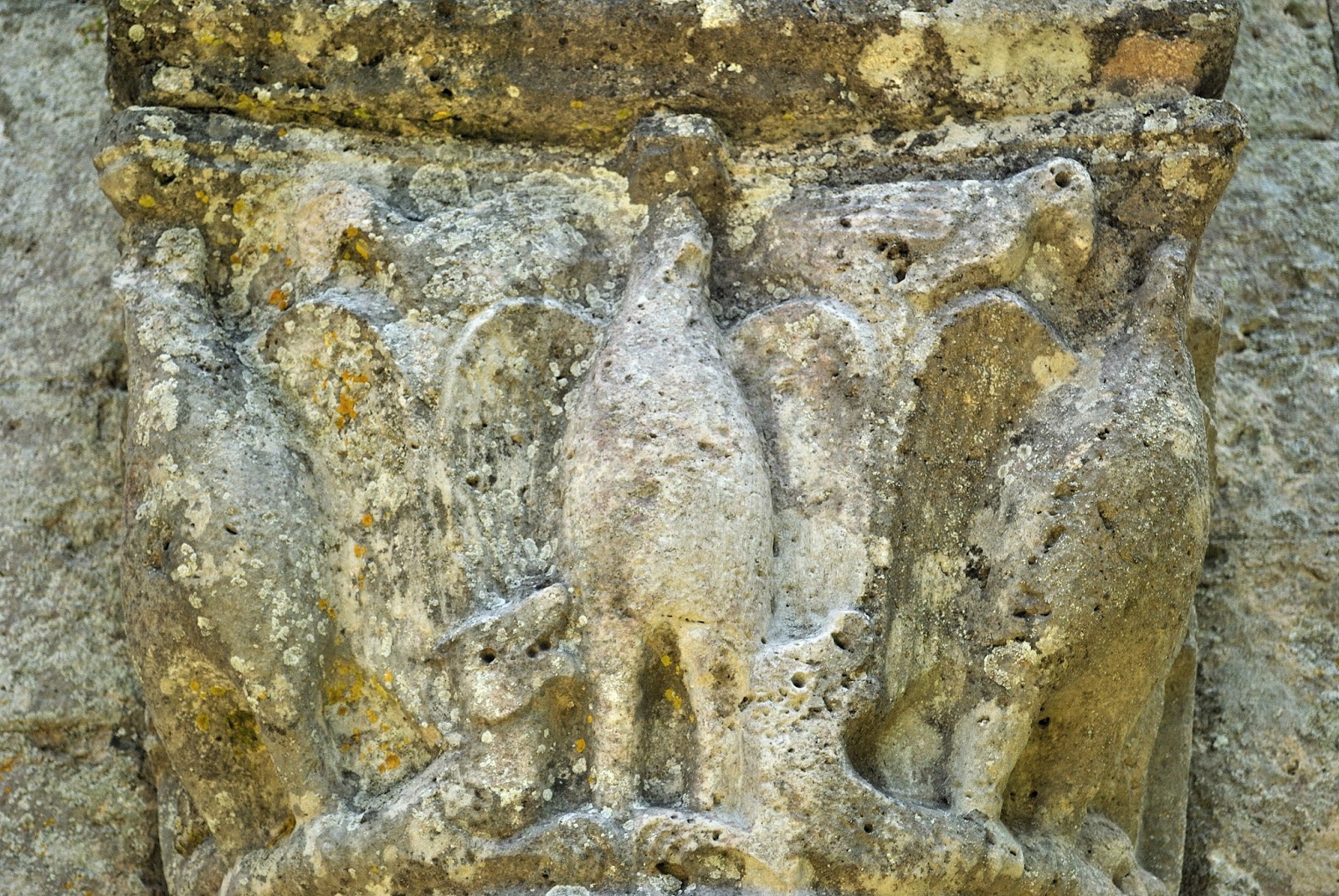
This is one of the best example of Romanico Pugliese architecture.


The abbey of Monte Sacro was ruled by the monastic order of Benedettini. the Abbey reached its best led by Gregorio, a monk of great culture who has written De hominum deificatione

The abbey had one of the richest library of the Apulia medieval. 

Its archive was moved to Siponto, then destroyed by the Ottomans in 1620. 


Most probably the abbey had had a scriptorium too.  


The incredible thing is that the abbey was built on a preexisting pagan temple dedicated to Zeus Dodoneus.


In fact, Monte Sacro was previously called Monte Dodoneo.

Frankly, it's sad to see this wonderful abbey neglected and partly destroyed.

Hopefully, in the future this magic place will resuscitate, like it happened for the abbey of Pulsano and the one of San Leonardo.

I feel reinvigorated after this astonishing tour.

It's 1 pm. It's still early.

Therefore, I descend the mountain, and go straight to the beach to swim.

There a lots of nice beaches on the coast. 

I decide to head to the port, where is located a Roman villa, used to store olive oil and wine.


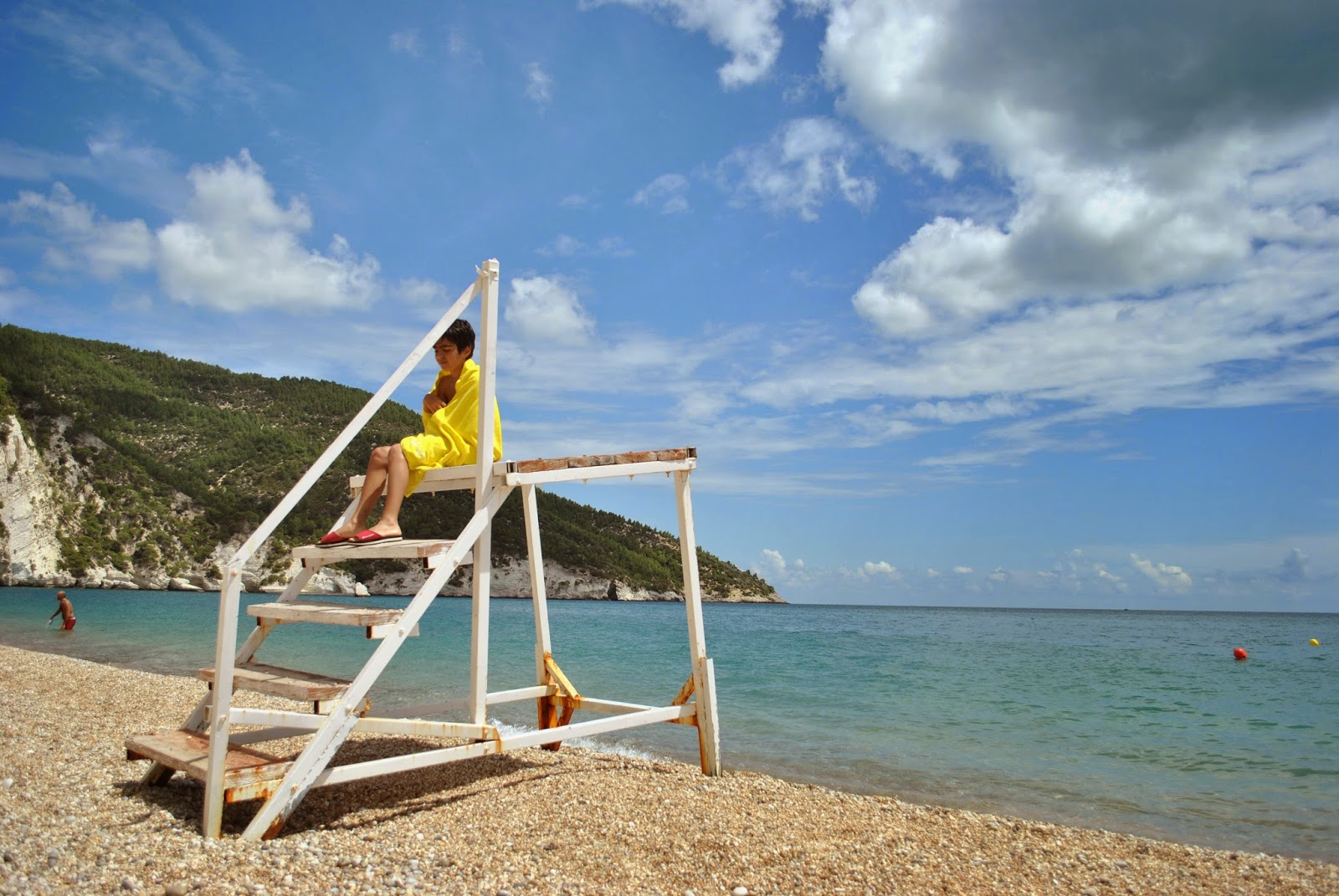
The sea is wonderful in Mattinata.

Gargano is a continent on small scale. 

Come here, you won't be disappointed.

Ps.
Click here, if you wish to view more pics

Friday, 24 April 2015

Vieste, pearl of Gargano

Last week, the American web site BuzzFeed has published an article highlighting the 36 most beautiful Italian locations.


Well, among those there was Vieste, a picturesque town located in the hearth of Gargano.

I have been many times in Vieste.

I know it pretty well.


From my point of view, the way from Mattinata to Vieste is just astonishing, with so many beaches, small and big, crowdy and solitary.


There is the Mergoli beach with faraglioni in Mattinatella, soon after Mattinata, heading to Vieste.


Then, you find Vignanotica.


After Vignanotica, there is Pugnochiuso, an amazing place where you may admire the Portopiatto beach.


A couple of miles after Pugnochiuso, there is Porto Greco, another amazing beach.


I have been in Vieste to investigate about Mimmo Sesta, one of the heroes of tunnel 29 in Berlin, during the “cold war”.

Mimmo Sesta was born in Vieste.


The territory of Vieste has been inhabitated since the Paleolithic.

A couple of miles from Vieste, It has been discovered one of the biggest flint mine in Europe, the Defensola mine, which dates back to 5000 BC.

Vieste was looted by Venetians in 1239.

However, the major disaster occurred in 1554, with the Turkish, led by Dragut Rais.

Thousands of inhabitants have been beheaded on chianca amara (rock of sorrow).


Vieste is one of the tourist capital of Apulia.


I strongly recommend you to visit la perla del Gargano, at anytime, except on August, because it's just so crowdy.

You better visit it on May, June or even September.


Once there, do not forget to visit the old ghetto, located in Via Giudeca.


Wednesday, 11 February 2015

The Daunians and opium

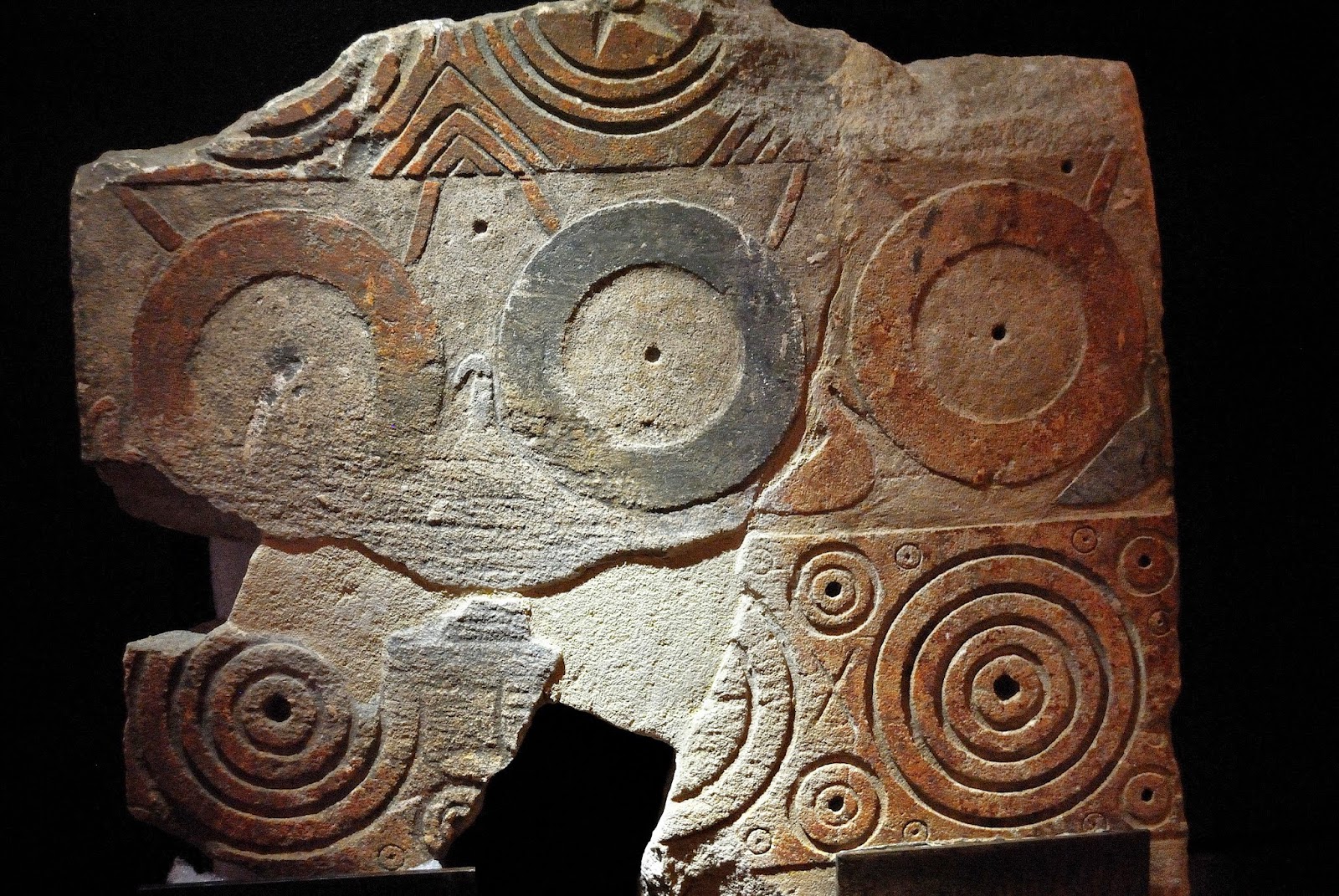
The castle of Manfredonia hosts the permanent exhibition of the Daunian stele (VIII – VI century BC).


The Daunian stele are so intriguing because they unveil the culture, the ordinary life of the Daunians living 2700 years ago.


The stele have been found during the ‘60ies around Manfredonia.


Silvio Ferri, archaeologist and member of Accademia Nazionale dei Lincei, undertook the challenge of deciphering the stele.


He got involved thanks to Matteo Sansone, a chemist from Mattinata, who first realized the importance of such stele.


Silvio Ferri had figured out that the stele were conceived for funerary purposes.

From my point of view, one of the most original interpretation of stele is given by Maria Laura Leone, researcher and founder in 2001 of artepreistorica.com.

Some of the stele are polychrome, like the one below: red and black.


Such Stele can be divided in male and female ones.


The male ones are more simple as they describe males hunting or fighting.


The female stele are pretty sophisticated as they illustrate man sailing or fishing; women talking, or on procession, or even carrying out magic-therapeutic rituals.


A recurring element portrayed in female stele is opium, (papaver somniferum).


According to deamuseum “The earliest reference to opium growth and use is in 3.400 BC. When the opium poppy was cultivated in lower Mesopotamia. The Sumerians referred to it as Hul Gil “the joy plant”.


Opiates reports that Galen lists its medical indications, noting how opium "...resists poison and venomous bites, cures chronic headache, vertigo, deafness, epilepsy, apoplexy, dimness of sight, loss of voice, asthma, coughs of all kinds, spitting of blood, tightness of breath, colic, the lilac poison, jaundice, hardness of the spleen stone, urinary complaints, fever, dropsies, leprosies, the trouble to which women are subject, melancholy and all pestilences."

Daunians used opium for both shamanic and therapeutic purposes.


Therefore, the thesis of stele as funerary objects evaporates, if you consider that:
  • just few stele have been found nearby Daunian tombs.  
  • the surrounding of Daunian tombs have not returned a significant number of stele.
  • the number of women stele overwhelm the male ones.
According to Maria Laura Leone, the stele reveal the Daunian pantheon.

Therefore, her thesis seems to me much more realistic.


Please click here, should you wish to view more pics


Wednesday, 23 July 2014

Vignanotica, the white rocks beach

Vignanotica is a place in the hearth of Gargano, the north side of Apulia.

Gargano is named the "Holy Mountain" due to its high degree of spirituality.


Vignanotica is within the Gargano National Park.


This park is famous for so many reasons.

The most important one is that it is the richest area in Italy in terms of biodiversity.


Today I went there to spend an entire day.

Firstly, I decided to walk along one of the several nature trails available.

It took me a couple of hours to complete one of around 5 miles long.

The place is quiet, ideal for those who look for peace.


The environment there is just so beautiful. The air is reinvigorating. In other words, I am just surrounded by the Mediterranean scrub.

Then, I decided to go to the beach.


I have to admit that I am just astonished by the bright white of the rocks along the beach.

I have never seen anything like that so far.

The sea is clean and fresh.

I lay myself down to sunbath. While looking at the sky, I hear a French family coming over.

Their surprise is great.


I feel glad for them.

Actually, they seem to me pretty much rewarded for the journey which brought them from France to Apulia.

If you wish to view more pics, please click here