Showing posts with label napoli. Show all posts

Saturday, 1 July 2017

Toni Servillo legge Napoli

Napoli. 

Si fa presto a dire N-A-P-O-L-I. 
 
E poi, perché Napoli? Partenope!


È un po’ come il dilemma: Basilicata o Lucania?

Sono stato a Napoli in maggio. Ho fatto esperienza di Napoli da poco tempo, ahimè. Da allora ho sempre voglia di tornarci. 

Napoli è ricca d’arte (il centro storico di Napoli, come i “Sassi” di Matera, è patrimonio Unesco). 

Ho avuto il privilegio di vedere Napoli e tutta l’area vesuviana da Capri, meglio dalla villa del medico svedese Alex Munthe il quale elesse Capri a sua madre adottiva.

Il panorama è di una bellezza unica.


Ho ammirato a Napoli i Caravaggio colà custoditi, come anche l’ampia gamma di dipinti della scuola napoletana. 


Ciò che attira di Napoli non è solo la sua ineguagliabile bellezza ma anche il suo popolo e le sensazioni che si provano sulla pelle ed allo stomaco quando cammini per via Dei Tribunali.


‘O cazone, pijiati ‘o cazone” mi invita bonariamente a scegliere tra pizza e calzone un anziano signore cui è rimasto in bocca solo un dente, come ad un bambino.


Napoli. Si fa presto a raccontarne la poesia, ed il contributo al teatro mondiale che questa città ha prodotto.


Ci ha provato Toni Servillo, con l’interpretazione folgorante di testi tratti da classici e contemporanei: Giovanni Di Giacomo, Edoardo De Filippo, Ferdinando Russo, Raffaele Viviani, Mimmo Borrelli.


 E poi ancora Enzo Moscato, Maurizio De Giovanni, Giuseppe Montesano, Antonio De Curtis e Michele Sovente.

Prendendolo per mano, Servillo conduce il pubblico nelle stanze della poesia, del teatro, della canzone, del rapporto unico con l’aldilà della cultura napoletana. 


Un altro leit motif dello spaccato di Napoli offerto dall’attore attraverso la lettura dei testi è la grande miseria che ha sempre accompagnato una parte del popolo. Pier Paolo Pasolini diceva che Napoli è la città sottoproletaria per antonomasia.

Il popolo di Napoli ha storicamente dimostrato fierezza, ribellandosi a chi le faceva violenza.


Risultati immagini per 4 giornate di napoli 
È stata la prima città europea a liberarsi dal nazi-fascismo, con gli scugnizzi che lanciavano bombe ai panzer tedeschi. 


Lo spettacolo Toni Servillo legge Napoli tenutosi sabato 30 giugno fa parte di un calendario di eventi teatrali organizzati dai teatri uniti di Basilicata.


Gli spettacoli hanno come palcoscenico il terrazzo di Palazzo Lanfranchi a Matera.
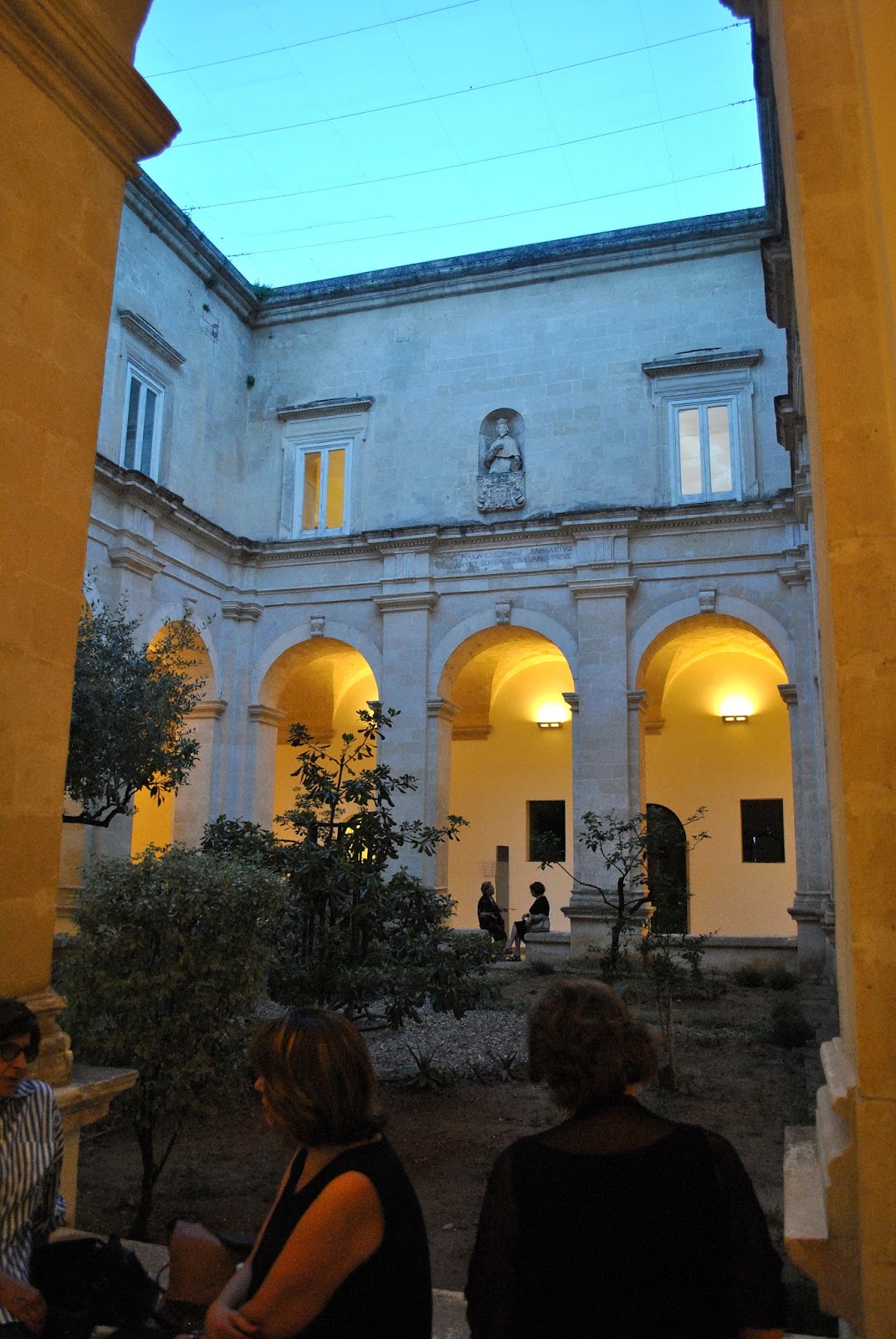


In una serata fresca, alla vigilia della sentitissima festa popolare della Madonna della Bruna (2 luglio), la platea gremita segue con attenzione i virtuosismi dell’attore nato ad Afragola nel 1959.


Dice di se Toni Servillo: “Il fatto di essere diventato famoso in tarda età, oltre i 40 anni, significa avere avuto il tempo di sviluppare una forma di antidoto verso la celebrità comunemente intesa […] Credo che diventare famosi da giovani sia una delle disgrazie più grandi che possano capitare”.


Non è vero che l’Italia sia priva oggi di grandi attori.

Abbiamo Toni Servillo. 

Teniamocelo stretto ed andiamone fieri.


Sunday, 18 December 2016

Journey to Naples

Visiting Naples is just a unique experience. You'll never forget it. Guaranteed.

However, in order to understand Naples, its regality combined with decay, we must quickly review the history.


In 1861, the Kingdom of Two Sicilies (Palermo and Naples) unified the country after having conquered Florence, Milan and finally Turin.

The backward Savoia crown, which set his capital in Turin, was rejected beyond the Alpes…

No, that's not true.

The events occurred in the opposite way.

The Savoia crown conquered the prosperous South of Italy, supported by the UK who aimed to tear apart the 2nd largest fleet in Europe, just behind the English one.

The first move the Savoia army made once arrived in Naples was stealing all the gold from the Banca di Sicilia. In fact the Savoia had incurred in a huge debt to finance the wars previously undertaken.

Additionally, the Savoia appointed Liborio Romano as prefetto di polizia of Naples because he was well connected with local mafia (camorra). Savoia had used camorra to preserve the precarious status quo. 

As result of this, camorra got institutionalised.


This premise is fundamental to understand Naples today.


Visiting Naples will reveal you its massive cultural heritage.

I have spent there three days. Nevertheless, one week is not enough to view all the jewels that Naples conserves.

Let me just mention the Certosa di San Martino (pictured).

I have rarely seen anything as astonishing as this.


A visit to Naples is also worth because there are three Caravaggio's paints (pictured), in the order shown below: Le sette opera di Misericordia, Martirio di Sant'Orsola and ultimately La flagellazione di Cristo.


The first one was commissioned by the Pio Monte della Misericordia, a charity institution who paid 400 ducati to secure the Michelangelo Merisi's paint.

This paint is so plenty of life, so rich of elements. Probably, the most suggestive one is the lady breastfeeding his father. Caravaggio has even painted white drops of milk on the man's beard. 

The second one, Martirio di Sant'Orsola, was painted one month before he died. It's his last work.

If you carefully look at the paint, you'll notice that the Caravaggio's self portrait (his head) seems inserted into the Sant'Orsola body, or at least, I have such feeling. 

In other words, it's like if Caravaggio had prefigured his imminent end.   

This paint, bought by Banca Commerciale Italiana in 1972, was initially thought to be a Mattia Preti's paint.

In 1980, researchers have once for all clarified that it must be ascribed to Michelangelo Merisi.

This paint is part of a fantastic collection owned by Banca Intesa-San Paolo, exhibited in the historical location of palazzo Zevallos-Stigliano, where currently is shown the exhibition Fergola, lo splendore di un Regno.

Intesa-San Paolo promotes arts throughout the country by a triennial project called progetto cultura

Concerning the third Caravaggio's paint, La flagellazione di Cristo, it's located in the Capodimonte museum.

Capodimonte is an awesome museum, where you'll enjoy paints depicted by Tiziano, Raffaello, Botticelli, Mantegna, Masaccio, Artemisia Gentileschi and so on.

Additionally, Capodimonte museum exhibits several paints of the so-called scuola napoletana, a movement profoundly inspired by Caravaggio since he arrived in Naples. His presence, his style had a tremendous impact on the local painters. 

Keeping talking about art, I cannot refrain from mentioning the Stendhal syndrome I felt for the first time in my life when I entered the Cappella San Severo.

Cappella San Severo is the mausoleum which the Prince Raimondo di Sangro conceived for his family in the middle of 17th century. 

This place is magic. It reflects the esoteric knowledge practised by the eclectic Prince.

I consider the Cristo velato as well as the disinganno (pictured) among the most beautiful things I have ever seen. 


Cristo velato was sculptured by the Neapolitan sculptor Giuseppe Sanmartino. 


Instead, Disinganno was made by Francesco Queirolo


Naples is not only one of the main European capital in terms of art and culture. This city is also special because of his people.

People struggle here to carry on. A high unemployment rate lashes the city. Despite that, Neapolitans haven't lost their humanity.

And what about their language? It's so musical, so melodic. 


Making coffee is an art in Naples.

I have experienced it by ordering a coffee in Caffe delle Muse.


Aldo (pictured) asks me "Shall I put sugar into the cup?"


I am used to put sugar into it on my own. So the question sounded me pretty wired.

Aldo feels my concerns, so he adds "You know, if you put sugar before pouring coffee into the cup, they get mixed better"

He was right.

Additionally, the art of drinking coffee expects that you clean your mouth with a glass of sparkling water.

So, without asking, Aldo serves me a glass of water before coffee is ready.

That's class, gentlemen. 


And what about via Pignasecca, where thousands of people walk up and down buying food? 


The elders sit around a table and  play cards along Via Toledo.


It seems to me unnecessary to point out that I have been eating pizza almost every day.


On the other hand, if you have enough of pizza and wish to eat proper meal with little money, I strongly recommend you to go to Nennella, located at Quartieri Spagnoli, right beside the Toledo underground station.

What incredible place is this one.

The waiters make fun of you, but it's just a joke, a nonsense.

The waiter who served at my table got irritated after I asked him twice half litre of wine "mate, do you speak Italian? Do you understand me? I have already told you that we serve just entire bottle, no half litre!".

A table beside me asked for additional serviette, and the owner replied "Nun mi scassare o' cazz" (don't break my bollocks). 

In other words, you eat and get entertained. You are actor and audience at the same time. 


Another magic place in which I have been walking several times is Via San Gregorio Armeno.

That's the street of presepi. Presepio represents the scenario in which Nativity takes place. Edoardo De Filippo have celebrated it in his comedy Natale in casa Cuppiello


I prefer to avoid to narrate further about my trip to Naples. It's up to you to put aside stereotypes and experience it.

I wish just to add something in terms of my feelings. After having left Naples, I feel like I'm missing Naples and its people. 

So, I started to watch over and over again Massimo Troisi' sketches and movies.

Massimo Troisi was a talented Neapolitan artist as well as an humble man.

The soundtracks of the Troisi's movies were played by another Neapolitan artist, Pino Daniele.  

Pino Daniele and Massimo Troisi, what a magic combination. Check this out voglio 'o mare


Both Pino and Massimo have passed away. 

Yesterday night I dreamed of Massimo Troisi cheering me up. This morning I woke up with my earth upside-down because of such a dream.

Massimo, Pino, this article is dedicated to you. 

Rest in peace

Tuesday, 16 December 2014

Bari, capital of Orthodox and Catholic religions

Se Parigi tenesse lu mer, sarebbe una piccola Ber (literally means: “If Paris had got the sea, it would have been like Bari”).


This motto says a lot about the baresita, which is the attitude of people of Bari to life.

I have been in Bari last time almost two years ago.


Yesterday, I have had chance to visit again this vibrating city. 


I have been living near Bari for almost four years.

I have got so many friends from Bari. People is very friendly there.

Bari is the capital of the Apulian region.


Bari is very similar to Naples. 

These are the biggest cities of the south of Italy, islands excluded.


There is a lot to say about Bari.

However, today I desire to write about San Nicola, and the devotion of both Orthodox and Catholics.


Due to the fact that Bari hosts the San Nicola’s relics, Bari is the destination of thousands of Orthodox pilgrims.

The skeleton of San Nicola was stored in Myra, Turkey.

However, when Muslims took over Turkey, 62 fishermen departed from Bari with the precise aim to steal the miraculous relics of the saint.

By the way, this is a typical example of baresita’.

They were quicker than Venetians, who also would have liked to put their hands on it.

It happened in 1087.

I have visited the cathedral, amazing example of Romanico-Pugliese.


After having seen that, I walk 200 metres further in Bari vecchia...


...till I come across the outstanding Basilica di San Nicola, another beautiful example of Romanico-Pugliese.

This stunning church hosts the relics of San Nicola.

I went in, then, I headed to the underground chapel. 

My surprise was very big when I saw the small chapel filled with almost 2 or even 3 hundred Orthodox pilgrims.

I was so enchanted by the spiritual atmosphere.

I was struck by seeing the believers together, almost attached one another.

They seemed to me like one body. One body, one soul.


They were singing a beautiful song, of which I just picked the word “Nicola”.

I even saw some people crying.

I spent there 20 minutes, however, I would have like to spend much more time.

Once again, I was just so fascinated by the touching atmosphere which I have breathed there.

They reminded me the first Christians who used to gather in catacombs. I am pretty sure that the engagement was the same.

Outside the marvellous Basilica di San Nicola, there is a statue of San Nicola donated by the Vladimir Putin in 2003.


Bari can rightly be considered as city of peace and fraternity.

Please click here, should you wish to view more pics